You’ve probably noticed it yourself. Step into a hammam and you’re wrapped in thick, soupy air that clings to your skin like a second layer. Yet curiously, the sweat doesn’t arrive right away. Compare that to a gym session where you’re dripping before you’ve even finished your warm-up set.
What’s happening here isn’t some magical property of traditional bathhouses. Instead, it’s your body wrestling with an atmospheric puzzle that completely rewires how thermoregulation works.
The Vapor Pressure Gradient Problem
Sweating isn’t just about producing moisture. Your eccrine glands are pumping out fluid constantly, but the real cooling magic happens during evaporation. When sweat transitions from liquid to gas, it yanks heat away from your skin surface through a process called evaporative cooling. This is basic thermodynamics at work.
In a typical gym environment, relative humidity hovers around 40-60%. That atmospheric composition creates what scientists call a favorable vapor pressure gradient. Essentially, there’s a substantial difference between the water vapor pressure at your skin’s surface and the surrounding air.
This gradient acts like a vacuum, pulling moisture off your body and into the atmosphere. Evaporation happens rapidly, sometimes so fast you don’t even notice you’re sweating until you’re absolutely drenched.
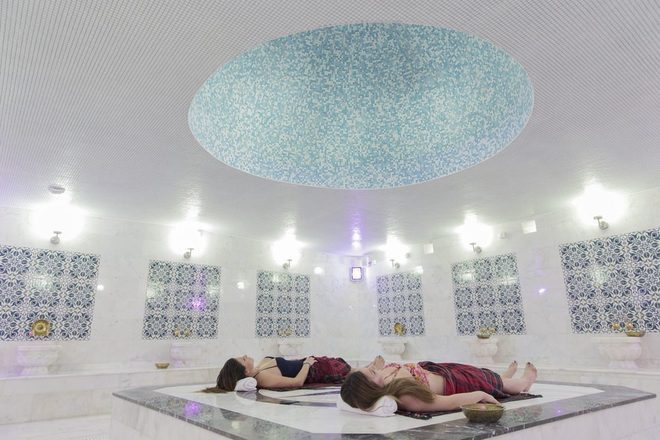
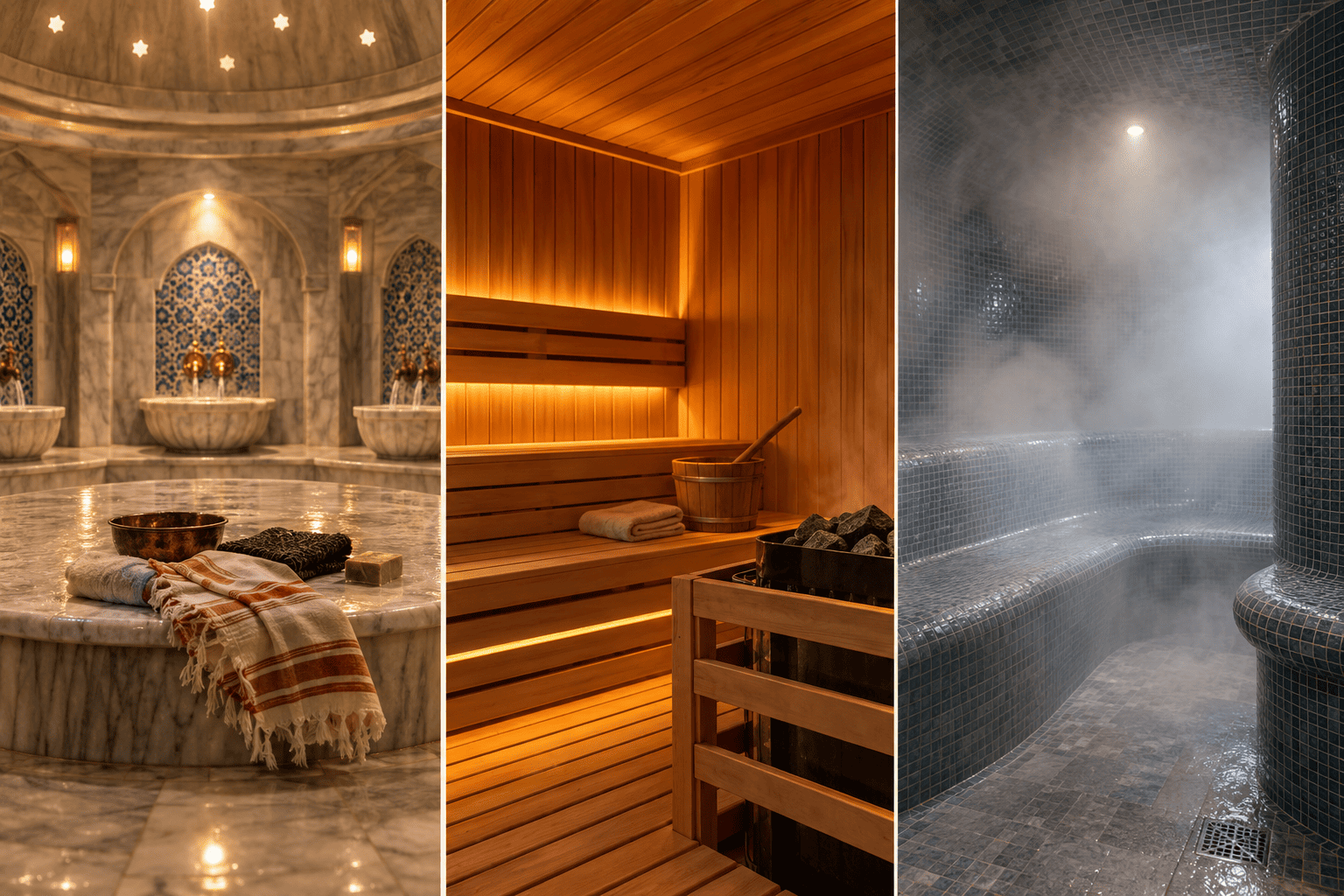
Now flip to the hammam scenario. Relative humidity in these steam-filled chambers regularly exceeds 90%, occasionally hitting saturation point. The air is already glutted with water molecules, which obliterates that helpful vapor pressure gradient. There’s simply nowhere for your sweat to go. Understanding why sweating starts later in the hammam than in the gym requires grasping this fundamental atmospheric barrier.
Your Hypothalamus Isn’t Getting the Memo
The hypothalamus serves as your body’s thermostat, specifically the preoptic anterior hypothalamus region. It’s constantly monitoring core temperature through thermoreceptors scattered throughout your body. When these sensors detect rising heat, your autonomic nervous system fires up the sweating response via cholinergic nerve fibers that stimulate your eccrine glands.
But, your hypothalamus makes decisions based on core temperature, not on whether sweating will actually work in your current environment. In the gym, you generate metabolic heat through muscle contractions during exercise. Your core temperature spikes, triggers sweat production, and evaporative cooling kicks in almost immediately. The feedback loop is clean and efficient.
Inside a hammam, you’re largely stationary. Metabolic heat generation is minimal. Instead, you’re absorbing environmental heat through radiation and conduction from the hot, humid air surrounding you. Your core temperature rises more gradually. Plus, since that initial sweat can’t evaporate in the saturated air, your hypothalamus doesn’t receive the usual cooling confirmation signal.
It takes longer for your internal thermostat to recognize you’re in thermal distress and ramp up sweat production. This delayed response explains precisely why
sweating starts later in the hammam than in the gym.
The Saturated Skin Phenomenon
Let’s talk about what’s actually happening on your epidermis. In humid environments, sweat accumulates on your skin rather than evaporating. You’ve got this glossy, slick coating building up. Interestingly, this layer creates a microenvironment with its own relative humidity that approaches 100%.
Your sweat glands, remarkable as they are, can sense back-pressure. When the skin surface is already waterlogged, the rate of sweat secretion can actually decrease temporarily. It’s a bit like trying to pour water into an already full glass. Your body recognizes the futility and briefly adjusts output. Scientists call this hidromiosis, a fancy term for the mechanical obstruction of sweat ducts by the surrounding hydrated skin.
This phenomenon contributes another layer to why sweating starts later in the hammam than in the gym. Your glands aren’t just fighting atmospheric saturation but also dealing with their own output creating a local barrier to further secretion.
Heat Storage And the Tipping Point
Something counterintuitive happens in high humidity environments. Because you can’t shed heat through evaporation, your body starts storing thermal energy. Core temperature creeps upward slowly but relentlessly. You might feel warm but not necessarily uncomfortable at first. There’s no drenching sweat to signal distress.
Eventually though, you hit a physiological tipping point. Your core temperature crosses a threshold where your hypothalamus essentially panics and floods the zone with sweat, regardless of whether it will evaporate.
You’ve probably experienced this sudden deluge in a hammam when sweat seemingly appears all at once after 10-15 minutes of dry heat exposure. That’s not a spontaneous generation. That’s accumulated thermal load finally triggering a maximum sympathetic response.
By contrast, gym workouts feature continuous evaporative cooling that prevents such dramatic heat storage. Your body maintains a more stable core temperature through steady sweating. The physiology behind why sweating starts later in the hammam than in the gym becomes crystal clear when you map the thermal load curves.
Humid heat creates a steeper, delayed spike while dry exercise heat produces a gradual, managed climb.
Acclimatization Differences
Regular hammam users often report they begin sweating more quickly with repeated exposure. This isn’t imagination. Heat acclimatization is a well-documented physiological adaptation.
With consistent exposure to hot, humid conditions, your body increases plasma volume, enhances sweat gland sensitivity, and reduces the core temperature threshold needed to trigger sweating.
Essentially, your body learns that in this particular environment, it needs to start the sweating process earlier even though evaporation remains limited. The adaptation doesn’t solve the humidity problem, but it does improve your heat tolerance.
Athletes who train in humid conditions show similar adaptations, developing more efficiently but ultimately still hampered thermoregulation in saturated air.
Practical Implications For Heat Therapy
Understanding why sweating starts later in the hammam than in the gym matters beyond academic curiosity. It has real implications for how you should approach heat therapy. In humid heat environments, you’re not getting the same immediate cooling relief that sweat provides during exercise.
This means your cardiovascular system works harder to dissipate heat through increased blood flow to the skin. Heart rate elevates, blood vessels dilate maximally.
For therapeutic purposes, this creates different benefits. The sustained heat exposure without evaporative cooling may enhance muscle relaxation, improve circulation, and provide deeper tissue warming.
However, it also means you need to be more cautious about hydration and exposure duration, since your body’s primary cooling mechanism is essentially offline.
The Conduction Factor Nobody Discusses
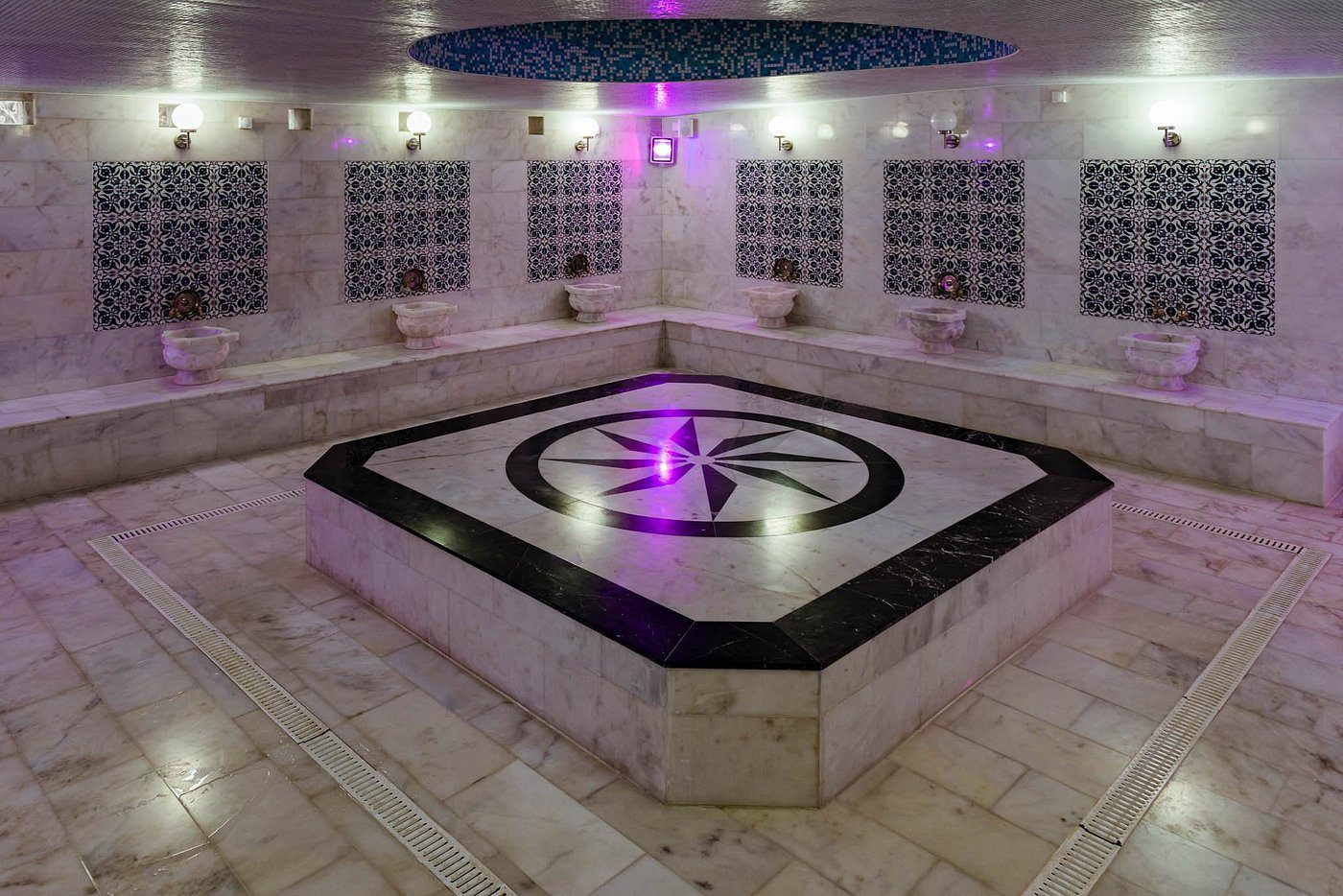
Here’s something most articles overlook. In a hammam, you’re often sitting on heated marble or tile. This introduces conduction as a major heat transfer pathway. Your body is simultaneously absorbing radiant heat from the air and conducting heat from the surfaces you’re touching. This dual heat input accelerates core temperature rise through mechanisms completely separate from metabolic heat generation in the gym.
Yet your sweat response still lags because it’s triggered by core temperature absolute values and rate of change, not by the source of heating. The mismatch between rapid environmental heat absorption and delayed sweat onset exemplifies why sweating starts later in the hammam than in the gym through yet another physiological channel.
Final Word
Curious to feel this phenomenon firsthand? The Old Hammam & Spa in Edmonton, London offers an authentic traditional bathing experience where you can observe your body’s remarkable responses to humid heat. Our carefully maintained steam rooms provide the perfect environment to understand these physiological principles through direct experience.
If you’re seeking muscle recovery, stress relief, or simply want to explore the fascinating intersection of environmental science and human physiology, we invite you to visit us. Book your session today and discover why sweating starts later in the hammam than in the gym.