After a hammam, many people notice the same unexpected sensation. The skin feels softer, smoother, and strangely thinner to the touch. This can be surprising, even slightly concerning, especially for those who associate healthy skin with firmness and resistance.
This sensation is not a sign of damage or skin thinning in a medical sense. Why your skin feels thinner after a hammam is rooted in temporary changes within the stratum corneum, specifically the way corneocytes adhere to one another. Heat, moisture, and controlled exfoliation briefly alter corneocyte cohesion, changing how the skin surface feels without compromising its structure or protective function.
What follows is a closer look at the biological, sensory, and cultural reasons behind this temporary shift, and why it is both normal and intentional.
The Outer Layer You Rarely Think About
Skin is not a single sheet. The part that feels “thin” after a hammam is the stratum corneum, the outermost layer of the epidermis. It is built like a brick wall.
Corneocytes are the bricks. Lipids are the mortar. Together, they form a flexible but protective barrier.
Under normal conditions, these corneocytes cling to one another tightly. They overlap. They resist pressure. They feel resilient.
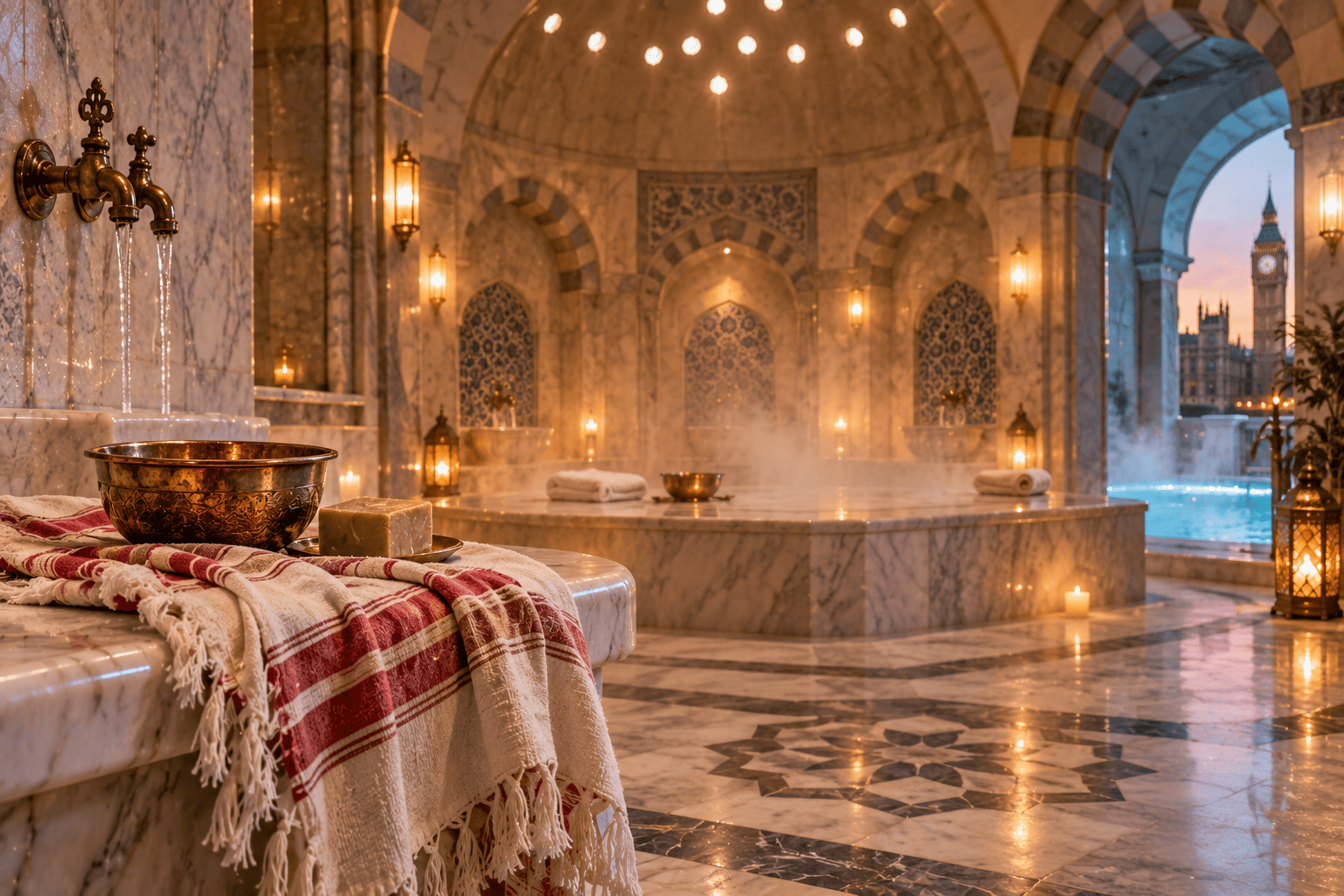
Inside a hammam, heat and humidity flood this layer. Water enters the corneocytes. They swell slightly. The lipid mortar softens. Adhesion between cells loosens.
Nothing breaks. Nothing tears.
But the grip changes.
This is the first clue to why your skin feels thinner after a hammam. The wall has not collapsed. It has relaxed.
Steam Changes Touch Perception Before It Changes Structure
Your hands are not neutral observers.
Heat increases nerve sensitivity. Moisture reduces friction. Together, they amplify tactile feedback. When you touch your skin after a hammam, your fingers glide instead of drag.
That glide tricks the brain.
Less resistance equals thinner, even when the skin’s actual thickness remains the same. Add in the warmth still radiating from your body and the contrast feels dramatic.
Sensory illusion vs physical reality
- Skin thickness does not suddenly decrease.
- The stratum corneum is temporarily more pliable.
- Reduced friction exaggerates smoothness.
- Heightened nerve response sharpens sensation.
Your skin feels changed because your perception has changed faster than your structure.
Corneocyte Cohesion: Loosened, Not Lost
Corneocyte cohesion refers to how tightly those outer cells hold onto one another. It is regulated by enzymes, moisture levels, and pH.
In a hammam environment, three things happen at once.
Heat activates desquamation enzymes that normally help shed dead skin slowly. Moisture allows these enzymes to work more efficiently. Gentle exfoliation removes cells that were already ready to leave.
The result is a surface that feels refined and freshly revealed.
This is the biological backbone of the question: why your skin feels thinner after a hammam. You are touching newer corneocytes, not fewer ones.
When the layer refreshes itself
If you stayed longer, scrubbed harder, or repeated the process daily, you could push the skin past comfort. But a traditional hammam rhythm respects recovery time. That balance is the difference between renewal and irritation.
Why This Feeling Fades Within Hours
Here is the reassuring part.
Corneocyte cohesion naturally re-strengthens. Lipids reorganise. Water content normalises. The enzymes slow down.
Within a few hours, often sooner, your skin returns to baseline. Not rougher. Not thicker. Just familiar.
If you moisturise afterwards, you support this recovery. Occlusives reduce water loss. Emollients restore glide without over-softening. Humectants attract balanced hydration.
This rebound is predictable, healthy, and expected. The sensation of delicacy is a phase, not a flaw.
Understanding this cycle is key to understanding why your skin feels thinner after a hammam without fear or confusion.
Thinner Does Not Mean Weaker
Modern skincare culture equates strength with toughness. Tightness. Resistance.
Skin biology does not agree.
Healthy skin is responsive. It adapts. It softens when conditions allow and firms when protection is needed.
A hammam temporarily nudges skin into a receptive state. This is why products absorb better afterwards. This is why massage feels deeper. This is why many people describe a subtle glow that lasts into the next day.
Signs your skin is responding well
- No stinging or burning.
- Even warmth, not redness.
- Softness without flaking.
- Comfort returning gradually.
If those boxes are ticked, your skin is not compromised. It is communicating.
Cultural Bathing Understood This Long Before Dermatology Did
Traditional bathing cultures never chased permanence. The goal was rhythm.
Heat, then cooling. Softening, then resting. Cleansing, then protection.
In hammams, the skin was treated as a living organ with cycles, not a surface to be stripped and polished endlessly. The temporary softness was welcomed. It meant the body had responded.
Science eventually gave this experience a name. Corneocyte cohesion. Barrier modulation. Enzymatic desquamation.
But wisdom existed first.
That long view helps contextualise why your skin feels thinner after a hammam as part of a process, not a side effect.
How To Support Your Skin After The Hammam
Do not rush to “fix” the feeling.
Instead, work with it.
- Drink water to support internal hydration.
- Apply moisturiser while skin is still slightly damp.
- Avoid harsh activities for the rest of the day.
- Let the skin recalibrate overnight.
Your barrier knows what to do if you give it space.
Where Experience Meets Intention
At The Old Hammam in Edmonton London, the rituals are designed around this exact understanding. Heat, steam, exfoliation, and rest are balanced intentionally so the skin emerges softened but not stressed.
That fleeting sense of thinness is not accidental. It is a sign that the process worked.
If you have ever wondered why your skin feels thinner after a hammam, now you know. Nothing has been taken from you. Something has been temporarily unlocked.
If you are curious to experience this state in a way that honours both tradition and skin science, come and visit us at
The Old Hammam in Edmonton London. Book a session, slow down, and let your skin do what it has always known how to do when given the right conditions.