There’s a specific kind of dread that comes with booking a public spa day. You’ve looked forward to it for weeks. Then you walk in, and there’s a stranger already on the bed next to yours, a group of women laughing in the corner, and a robe that’s been worn by God knows how many people before you. The relaxation you came for? It’s already gone.
This is why so many people quietly prefer private wellness spaces now. Not because they’re antisocial. Not because they’re difficult. But because real rest requires feeling genuinely safe. And safety, in a body context, is deeply personal.
So, here’s why private hammams feel safer than public spas.
Skin Has Memory
Your skin knows when it’s being watched. That sounds dramatic, but it’s true in a physiological sense. When we feel observed or self-conscious, our stress hormones stay elevated. Cortisol doesn’t just clock out because you’re in a nice room with ambient music. It hangs around. And that’s exactly why private hammams feel safer than public spas for so many people, especially women, people with body image concerns, or anyone who’s had a complicated relationship with their physical self.
In a private hammam, you’re not performing wellness. You’re actually in it.
The Architecture of Intimacy
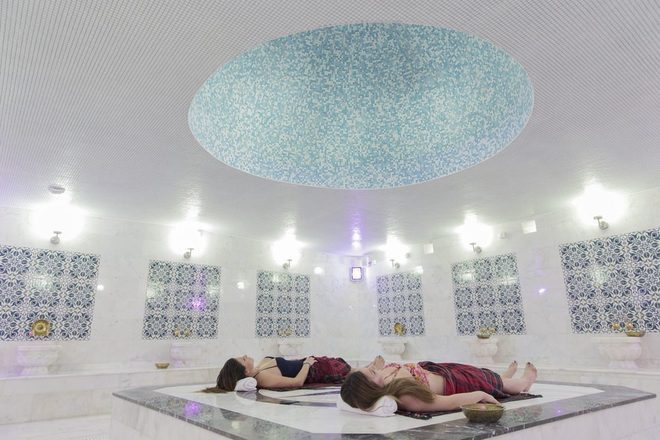
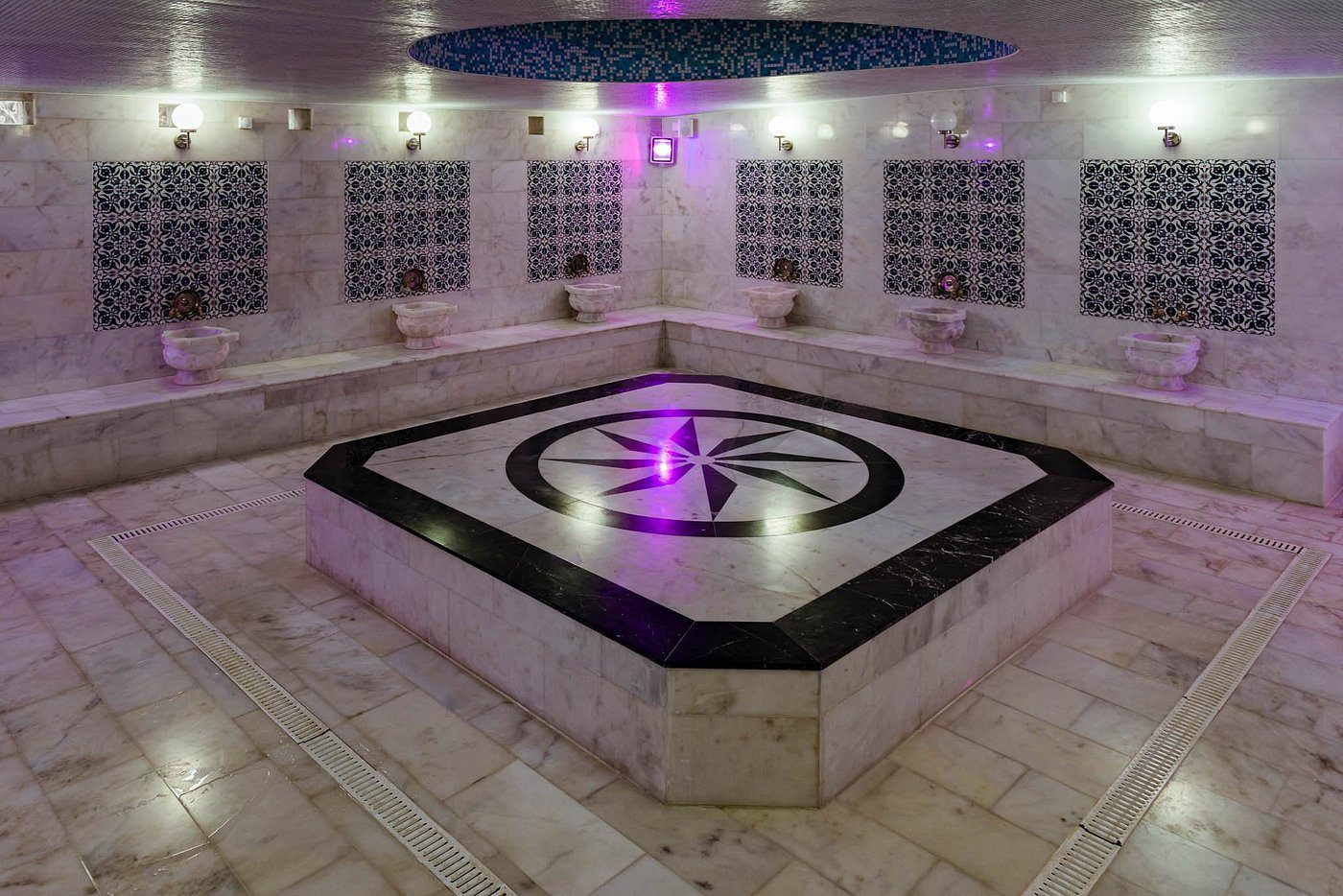
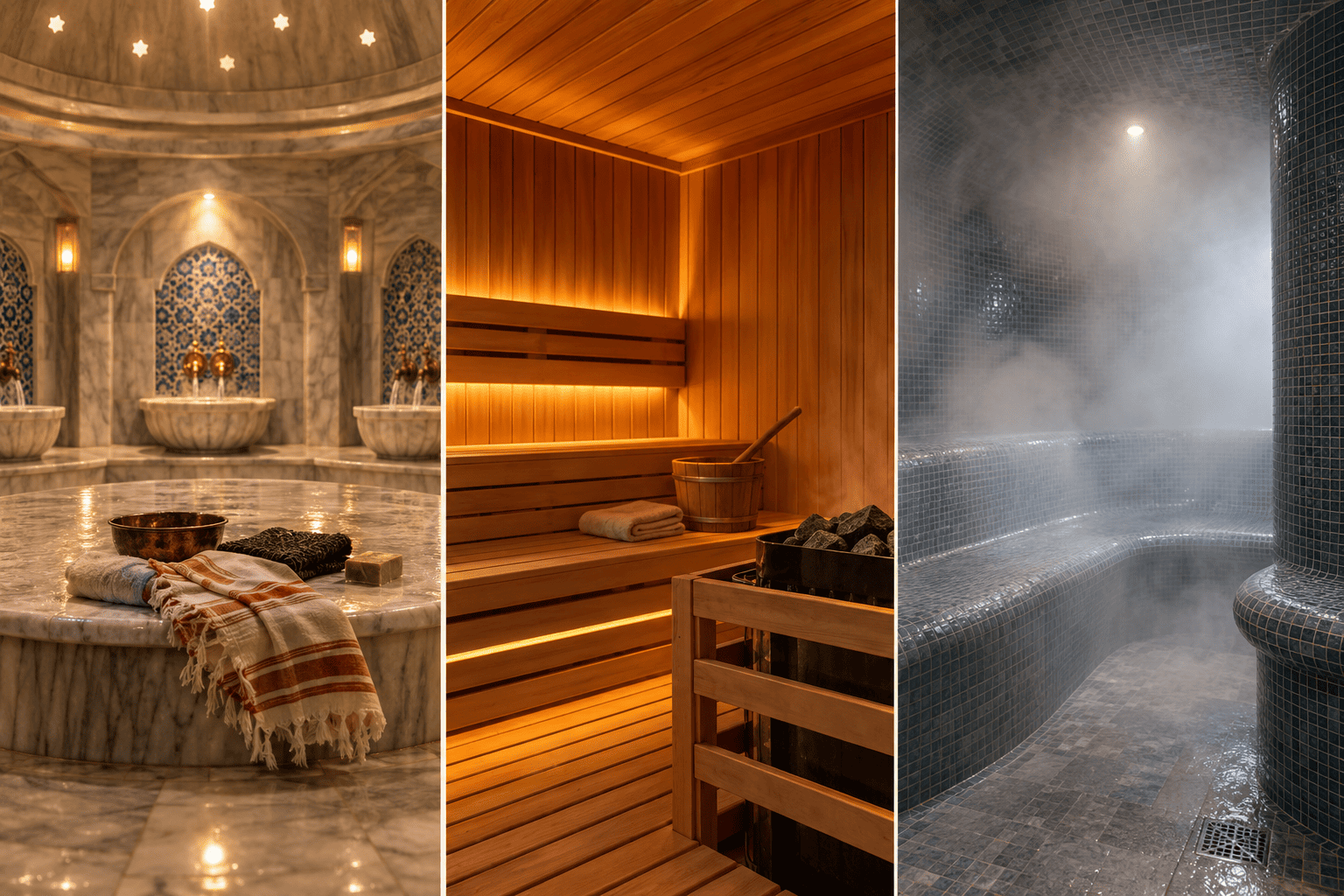
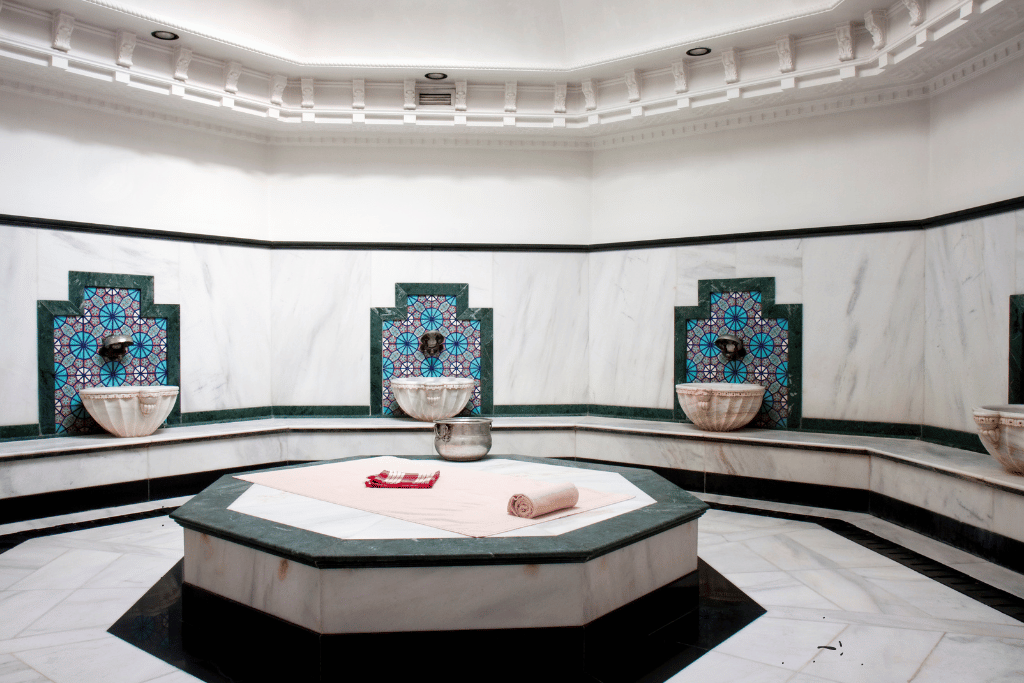
A traditional hammam was never meant to be a spectator space. Historically, the public hammam served a community function. But even then, different chambers offered varying degrees of privacy. The harara, the hot room, was intimate. Small. Steam-filled. Designed to make you feel cocooned, not exposed.
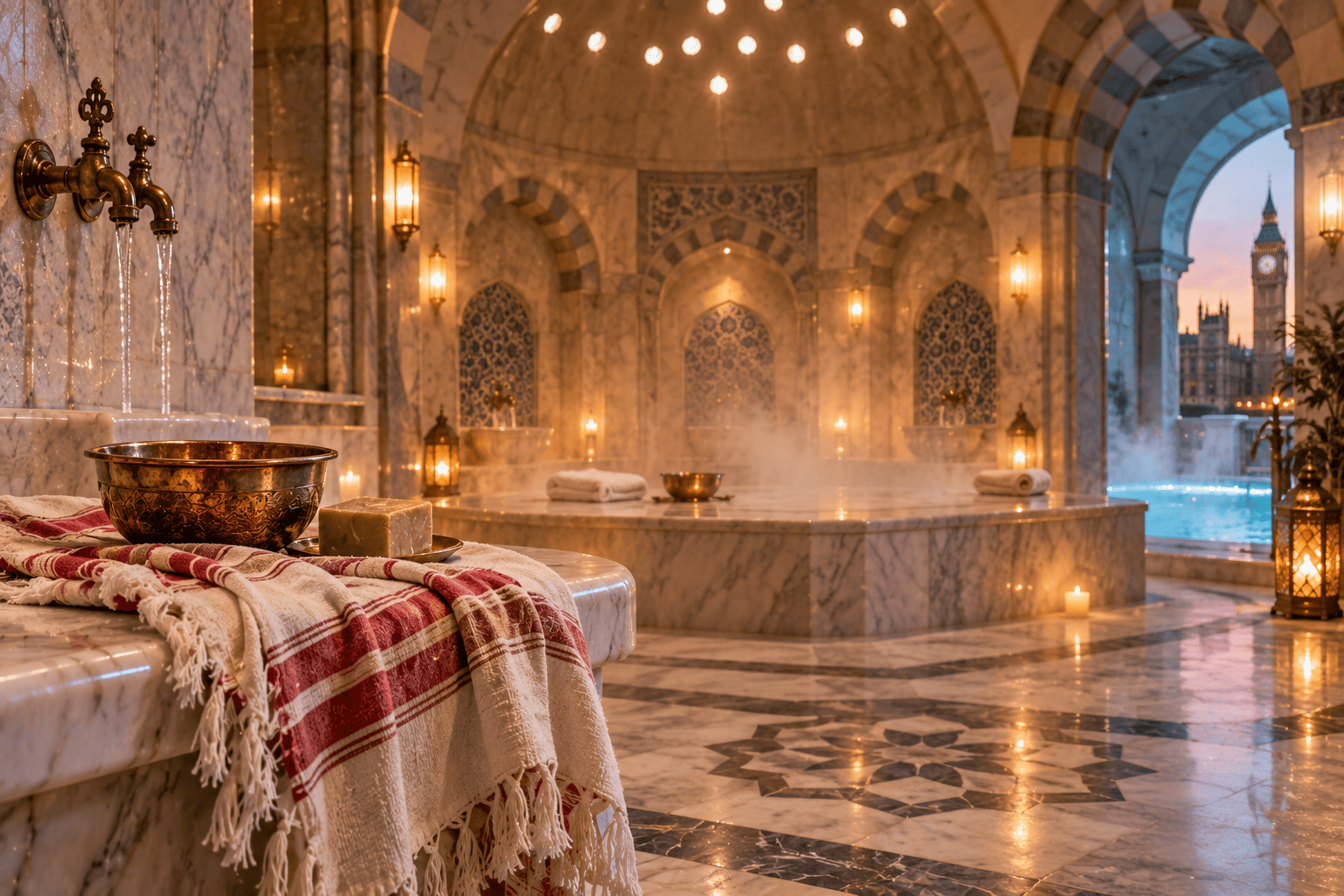
When you transpose that design into a private setting, something remarkable happens. The warmth, the marble, the water, it all does its job without interference. There’s no awkward eye contact. No overhearing someone’s divorce drama three tables over. Just you, the heat, and whatever your body needs to release.
This is a core reason why private hammams feel safer than public spas.
Yes, Hammam is Best For Everyone But Let’s Be Specific
Let’s be specific here, because “everyone benefits from privacy” is a bit vague.
New mothers returning to their bodies after birth often describe public spas as overwhelming. The noise, the exposure, the comparisons. Private hammam sessions give them space to reconnect with themselves without any of that.
People in recovery, whether from illness, surgery, or an eating disorder, often need a controlled environment. Shared spa spaces can be triggering in ways that aren’t always predictable. Private wellness rituals offer something public spaces genuinely can’t: the ability to go at your own pace, without any external pressure.
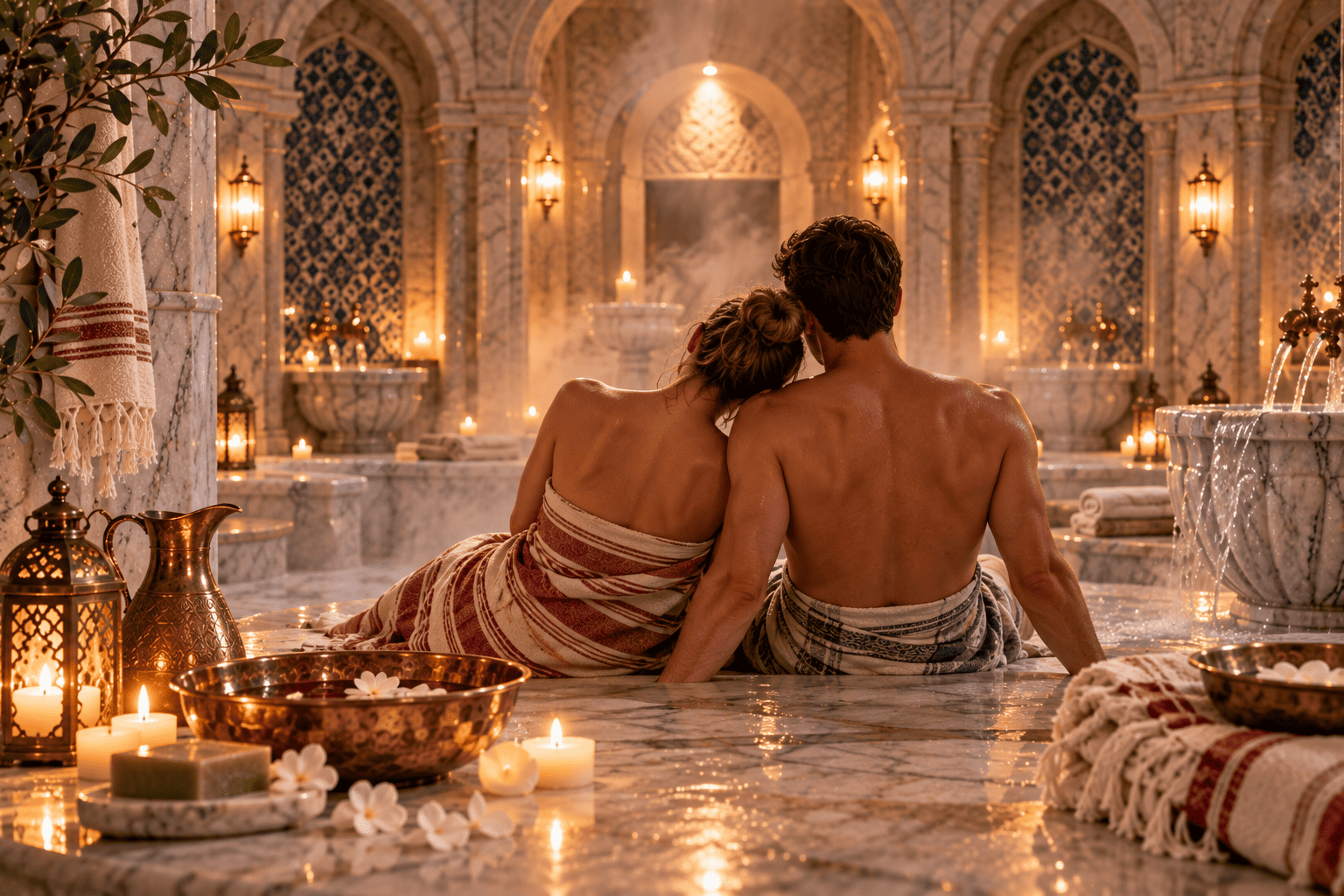
Couples use private hammams completely differently to how they’d use a public spa. There’s no performance of romance. It becomes something quieter and more honest.
And honestly, sometimes people are just shy. Which is completely valid and doesn’t need a medical framework around it.
The Noise Problem in Public Spas
Here’s something spa brochures never mention. Public spas are loud. Not always in an obvious way. But there’s the ambient sound of other people. The staff moving between rooms. Music that’s been chosen to please everyone, which means it pleases no one fully. The general hum of a shared commercial space.
The nervous system doesn’t fully soften in that kind of environment. It’s on low-level alert the entire time, which is the opposite of what you came for.
Private hammams, by contrast, are acoustically intimate by default. When it’s just you (or you and a partner), the soundscape shifts completely. You stop monitoring your environment. That’s when your body finally lets go.
Trust Is Not Automatic
There’s also something worth saying about the relationship between client and therapist in a shared versus private setting. In a busy public spa, practitioners are moving between multiple clients. They’re efficient. Professional. But stretched.
In a private hammam, the attention is yours. The practitioner isn’t mentally halfway to their next booking. The kese mitt, the black soap, the rinse, it’s all timed to you, not to a schedule built for fifteen people. That’s not a luxury detail. It changes the quality of care you actually receive.
And for clients who’ve had experiences, physically or emotionally, where trust was broken in some way, that undivided attention matters enormously. It’s part of why private hammams feel safer than public spas in a way that’s hard to put into words but immediately felt.
The Cultural Weight of the Hammam Ritual
The hammam isn’t a trend. It’s a ritual with roots stretching back centuries across North Africa, the Middle East, and Central Asia. It was always more than hygiene… It was a transition. Preparation. Restoration. Women went before weddings. After childbirth. During grief.
That cultural memory carries something. When you step into a private hammam, even if you’re in London rather than Marrakech, you’re borrowing from a lineage of intentional care. It gives the experience a weight that a standard spa treatment simply doesn’t have.
Private settings honour that weight. They create the conditions for ritual, not just service.
Come As You Are at The Old Hammam
If you’re in East London and any of this has resonated, The Old Hammam in Edmonton is worth your time. It’s a genuine private hammam experience, not a spa with hammam-inspired touches, but the real thing. Marble. Steam. Black soap. The full ritual, done properly, in a space that’s entirely yours.
No shared areas. No strangers. No performance. Just the oldest form of wellness care there is, in a setting designed to make you feel completely safe.
Book your private session at The Old Hammam and find out exactly why private hammams feel safer than public spas. Your body already knows the answer. You just need the space to feel it.