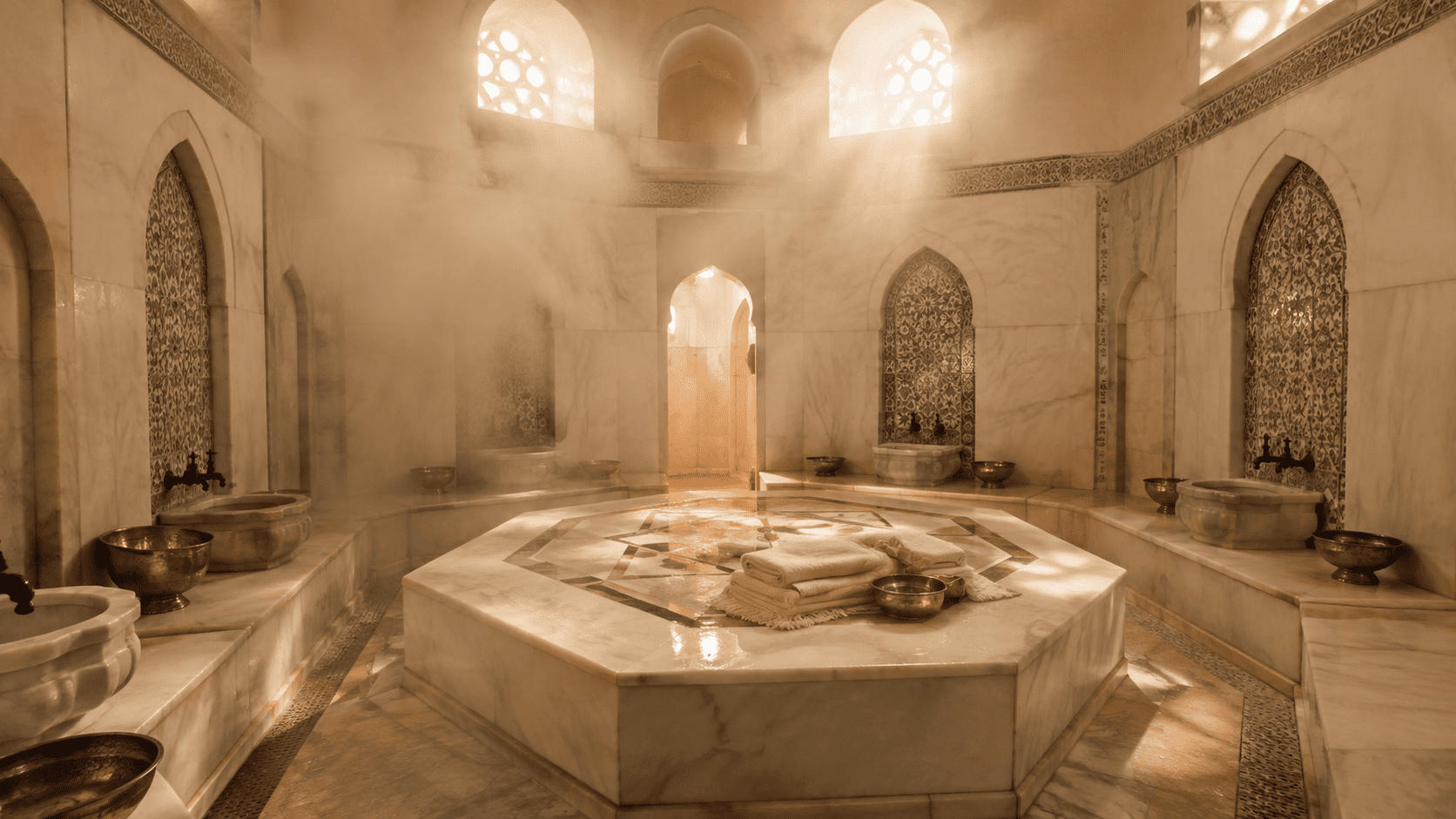
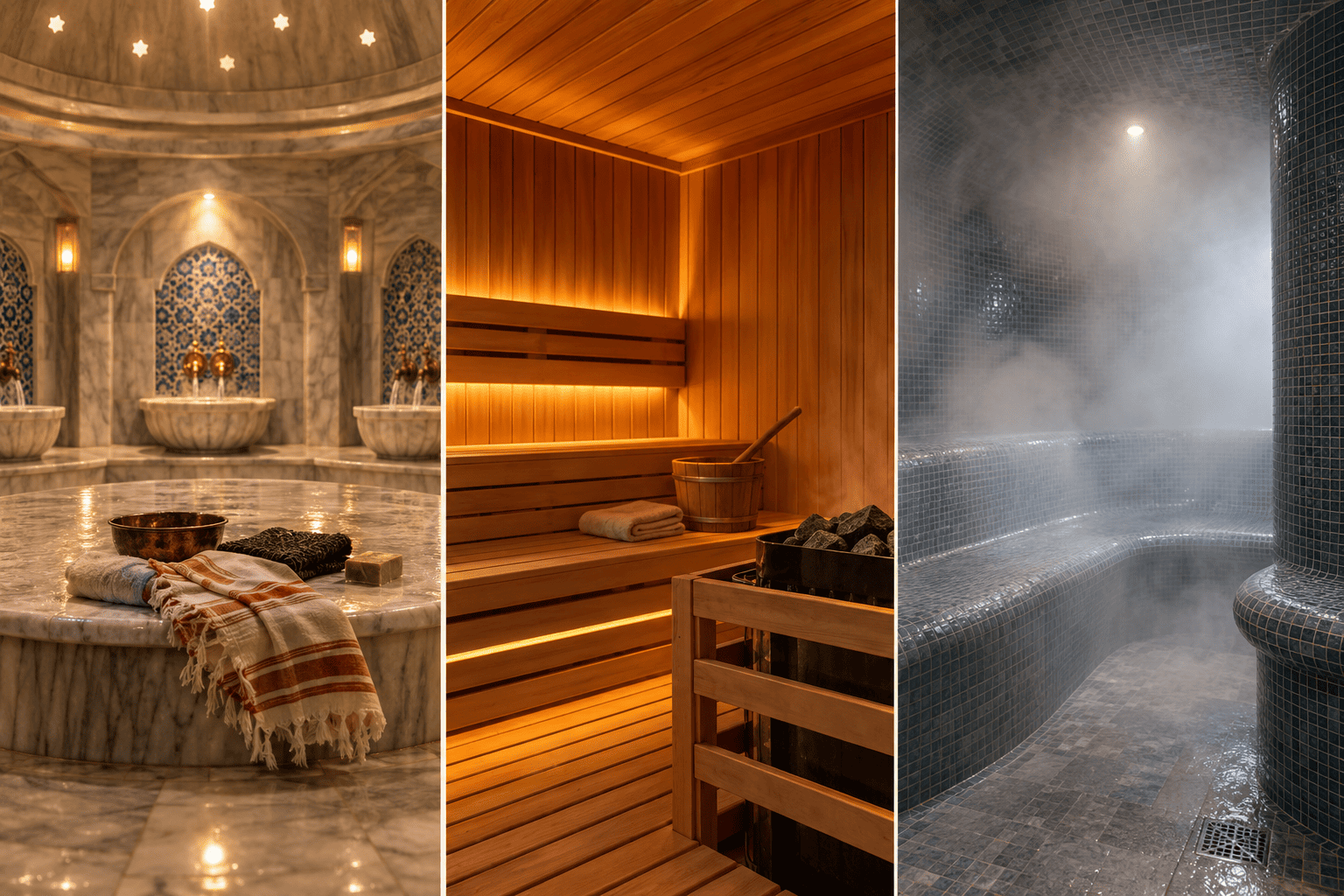
A hammam uses 100% humidity paired with conductive heat from a heated marble slab and basins for vigorous physical exfoliation and washing. A sauna delivers dry, low-humidity heat from heated rocks between 70°C and 100°C. A steam room relies on hot, vaporized water at 40°C to 50°C for passive sweating without treatments.
Understanding the core debate of Hammam vs Sauna vs Steam Room helps you pick the right recovery ritual.
What Is the Difference Between a Hammam, Sauna, and Steam Room?
The primary difference lies in heat source, moisture level, and activity. Saunas feature dry heat with 10% to 20% humidity, prompting heavy cardiovascular perspiration. Steam rooms pump hot mist into tiled chambers at 100% humidity to ease breathing. Hammams merge humid steam with warm marble architecture, focusing on active attendant-led washing and deep epidermal exfoliation.
When breaking down Hammam vs Sauna vs Steam Room, comparing their baseline operational environments reveals why each produces a distinct physiological outcome:
| Environment | Temperature | Humidity | Core Mechanism |
| Dry Sauna | 70°C – 100°C | 10% – 20% | Radiant air heat |
| Steam Room | 40°C – 50°C | 100% | Vaporized convective mist |
| Hammam | 40°C – 45°C | 70% – 100% | Conductive marble & scrub |
Rather than choosing just one therapy in isolation, combining dry heat, wet steam, and active bathing inside a structured hydrotherapy circuit delivers the greatest physiological reset.
What Is a Traditional Hammam?
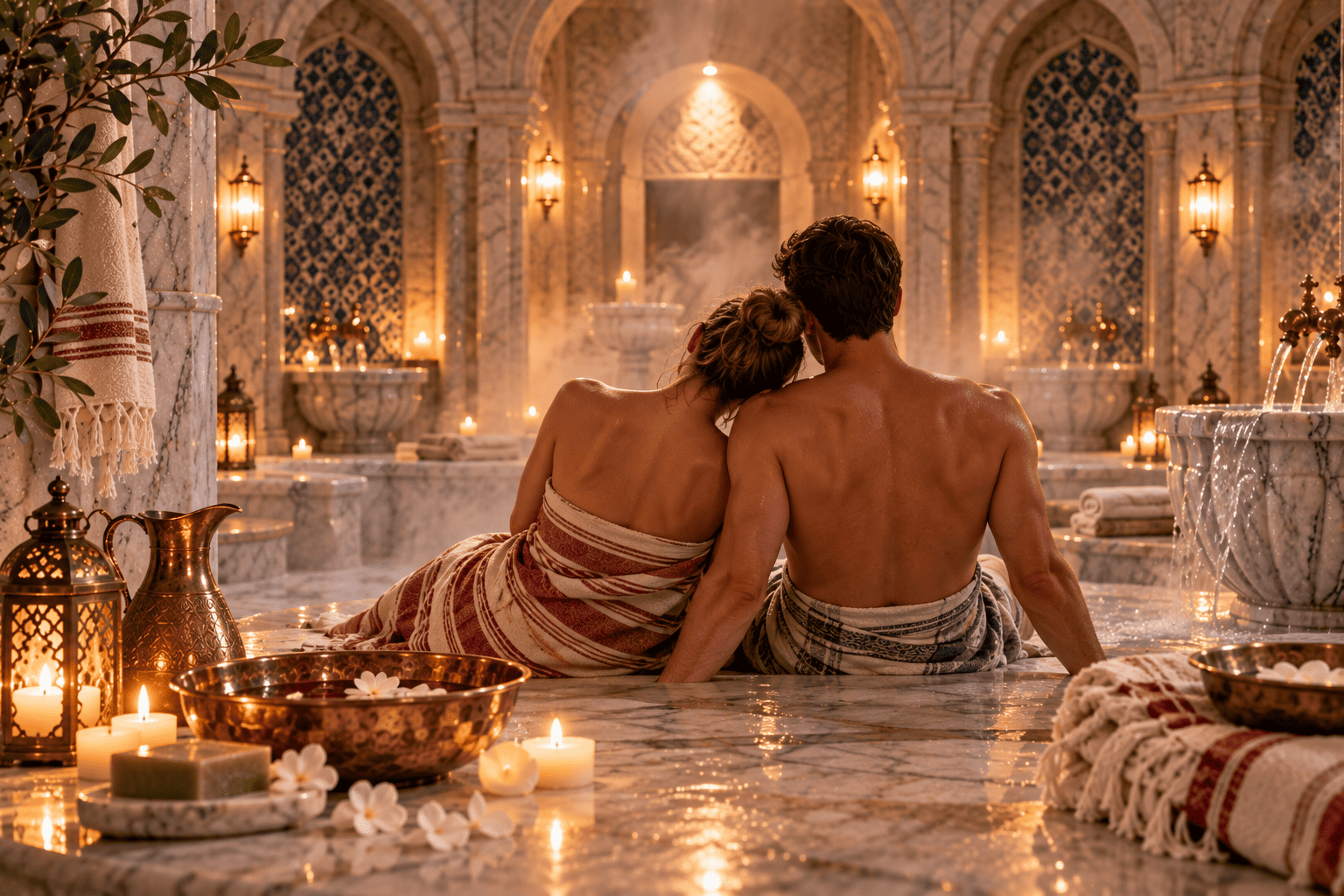
A traditional hammam is an Ottoman bathhouse that cleanses the skin through radiant marble platforms, running water from perimeter washbasins, and manual body scrubs.
Bathers soften their skin before an attendant performs a vigorous deep exfoliation using black soap and a coarse kessa glove, followed by an airy olive oil foam wash.
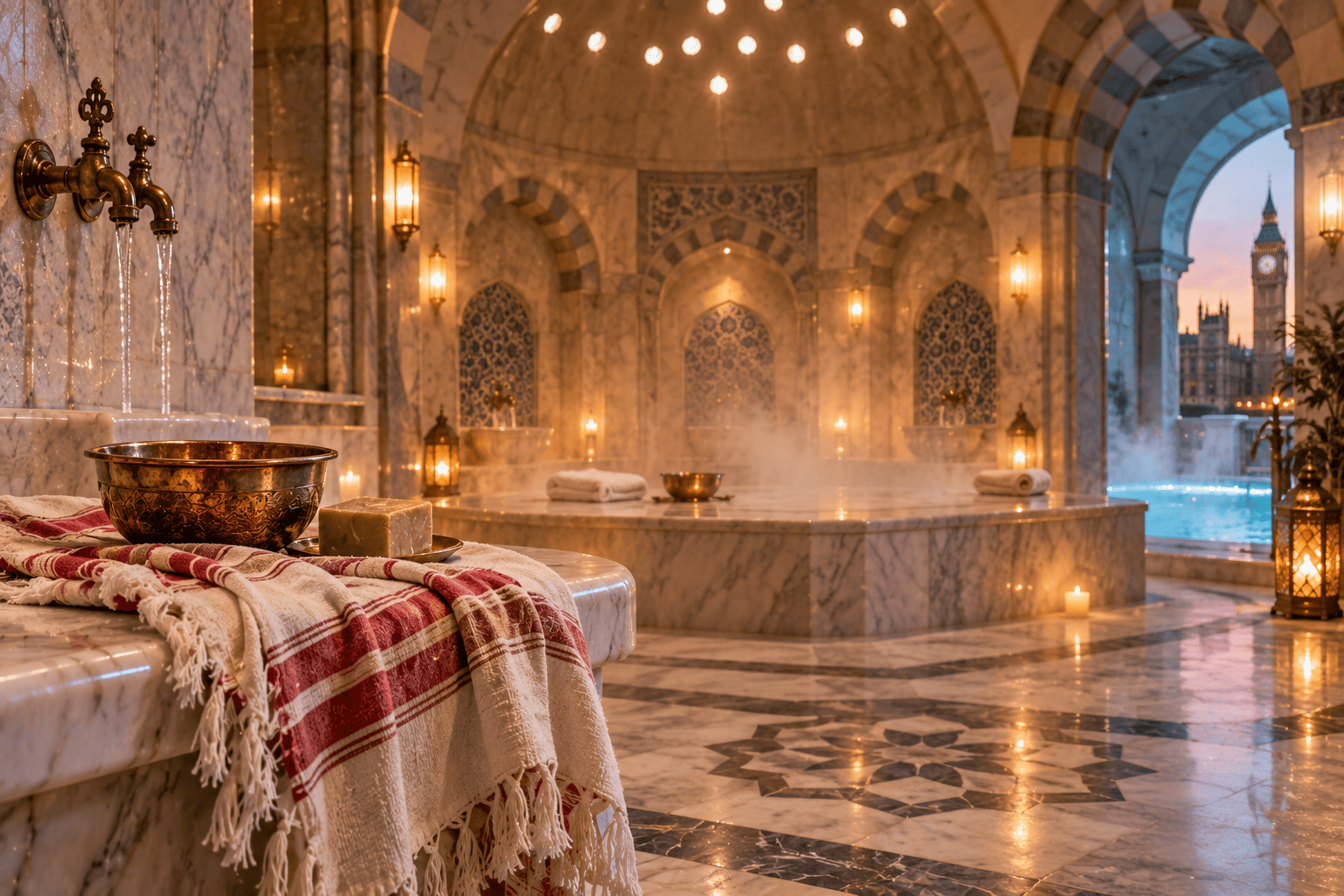
The architecture of a true bathhouse centers on stone and running water. Unlike a standard spa room with a single bench, an authentic bathhouse features an expansive main hall dominated by a central heated marble slab (Göbektaşı).
Along the perimeter walls, traditional washbasins (kurna) supply continuous hot and cold water. Bathers use authentic copper bowls to pour water over their shoulders, acclimating to the humidity before laying flat on the stone.
The heat inside the chamber softens keratinized dead skin cells. That makes mechanical exfoliation via a hammam scrub kessa remarkably effective, rolling off weeks of dead skin without harsh chemical peels.
To avoid common pitfalls like scheduling your heat session right after eating, review these frequent hammam booking mistakes before finalizing your visit.
What Is a Dry Sauna?
A dry sauna is an enclosed wooden room heated by an electric or wood-fired rock stove to temperatures between 70°C and 100°C. Maintaining low humidity levels between 10% and 20%, it triggers profuse cardiovascular sweating, loosens stiff muscle joints, improves arterial blood flow, and elevates heart rate without humid air condensation.
Stepping into a dry sauna creates an immediate physiological response. Because the air contains very little moisture, sweat evaporates rapidly off your skin, keeping your body’s natural cooling mechanism working hard. Regular sessions deliver proven sauna health benefits, including improved cardiovascular circulation and eased arterial stiffness.
In any comparison of Hammam vs Sauna vs Steam Room, dry saunas stand out for:
- Relieving deep post-workout muscular soreness
- Flushing out lactic acid buildup in legs and back
- Stimulating cardiovascular output similar to moderate walking
- Increasing joint mobility through intense radiant warmth
The key to sauna bathing is short, controlled intervals. Spending 10 to 15 minutes inside the dry heat primes your body for cold contrast therapy, which shocks your circulatory system into full gear.
What Is a Steam Room?

A steam room is an airtight, tiled enclosure heated by an external water generator that disperses continuous vaporized mist at 40°C to 50°C. Operating at 100% humidity, it coats the skin in condensation, hydrates sensitive respiratory passages, clears sinus congestion, and softens superficial surface grime.
Unlike the crisp, arid air of a wooden sauna, the air in a steam room is thick, misty, and intensely humid. You feel the heat immediately on your chest and throat.
Because moisture cannot evaporate from your skin in 100% humidity, your internal body temperature rises quickly. Clinical evaluations of steam room benefits demonstrate that warm inhalation opens restricted airways and improves overall skin hydration.
- Opening congested sinus pathways during seasonal weather shifts.
- Hydrating dried nasal passages caused by central office heating.
- Loosening tight bronchial tubes.
- Softening surface skin impurities prior to a deep cleanse.
Combining Heat, Cold, And Water: The Full Hydrotherapy Circuit
A complete thermal circuit alternates between extreme heat, rapid cold immersion, and aquatic recovery. This sequence forces blood vessels to rapidly dilate and constrict, flushing out metabolic waste, strengthening autonomic nervous responses, reducing cellular inflammation, and creating a natural endorphin release throughout the body.
| Step | Facility / Treatment | Physiological Action | Primary Benefit |
| 1 | Dry Sauna / Steam | Vasodilation | Deep heat opens blood vessels and triggers heavy cardiovascular sweating. |
| 2 | Shock Ice Bucket | Vascular Spasm | A sudden deluge of ice-cold water instantly constricts vessels and surges circulation inward. |
| 3 | Ice Room Chill | Inflammation Drop | Sub-zero ambient air cools tissue, quieting systemic inflammation and neural fatigue. |
| 4 | 7.5m Pool Lap | Active Reset | Low-impact aquatic movement normalizes core body temperature while cushioning joints. |
| 5 | Jacuzzi Soak | Deep Release | Targeted hydrotherapy jets massage tight muscle fascia for complete musculoskeletal relaxation. |
- Intense Thermal Vasodilation: Spend 15 minutes in the dry sauna or steam room to expand peripheral blood vessels and trigger heavy sweating.
- Cold Shock Therapy: Pull the overhead chain on a shock ice bucket shower or step into an ice room. The sudden cold drop causes blood vessels to constrict instantly, driving blood inward toward vital organs.
- Low-Impact Active Recovery: Swim gentle lengths in a 7.5m swimming pool. The water cushions joint impact while your core temperature normalizes.
- Hydrotherapy Massage: Finish in a heated jacuzzi where pressurized water jets knead tight lower-back fascia and shoulder knots.
Experience All Three at The Old Hammam & Spa in North London
Why choose between a Hammam vs Sauna vs Steam Room when you can experience all three under one roof in an authentic Ottoman thermal bathhouse in Edmonton?
At The Old Hammam & Spa (17 Church Street, London N9 9DY), we bring centuries of Turkish bathing heritage together with modern thermal facilities.
Our expansive North London bathhouse features:
- The 13-Basin Marble Hammam Room: Relax on our heated central marble slab (Göbektaşı) surrounded by 13 traditional marble washbasins for deep cleansing rituals.
- Finnish Dry Sauna: Unwind in high-temperature dry heat to melt away winter muscle tension.
- Aromatherapy Steam Room: Clear your respiratory airways in dense, vaporized herbal mist.
- Ice Room & Ice Bucket Shower: Reset your autonomic system with refreshing cold-contrast hydrotherapy.
- 7.5m Swimming Pool & Hydro Jacuzzi: Float, stretch, and soak in our dedicated aquatic recovery zone.
Whether you want self-guided thermal access or an attendant-led scrub and soap ritual, we have a session tailored for you.
Explore our full range of treatments and book your session directly on our hammam packages page or call our front desk on 020 8807 3330 today!