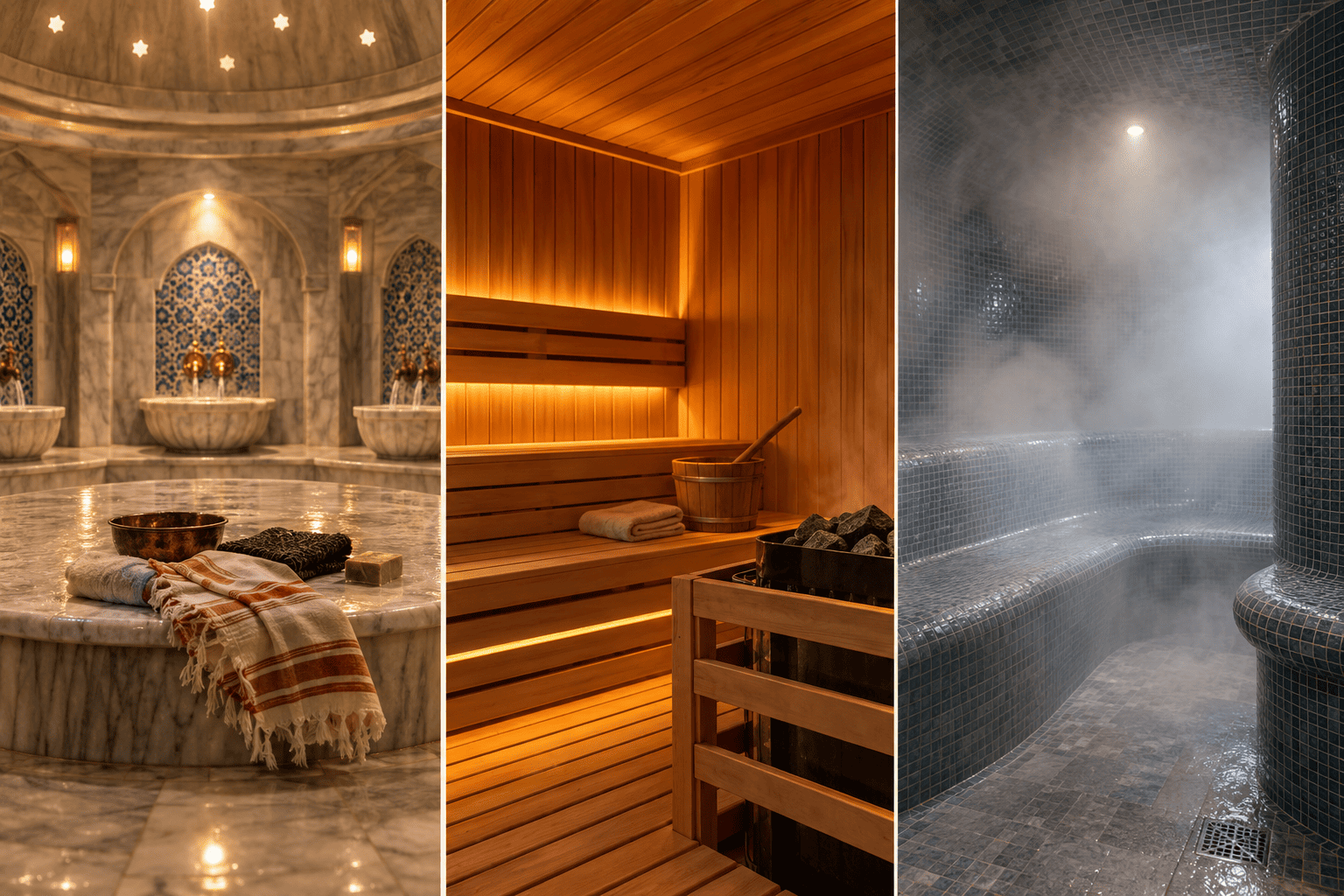
A moroccan hammam is a traditional steam bath and body cleansing ritual centred on warm vapour, olive-based black soap, and vigorous exfoliation. After warming the skin in a steam chamber, an attendant applies black soap, scrubs the body firmly with a coarse kessa glove, and rinses away dead skin cells before applying mineral clay.
Moroccan Hammam in a Nutshell
For anyone who has visited Marrakech or Casablanca, the mention of a Moroccan bath brings back memories of heated stone rooms, dense steam, and an unmistakable sense of physical lightness afterwards. For everyone else, the ritual often sounds unfamiliar. Most people in the UK know what a standard day spa feels like, but a hammam operates on an entirely different principle. It is not a quiet treatment room where you lie under a towel while someone gently applies scented lotion. It is a thorough, practical, and centuries-old cleansing practice that leaves your skin softer than any domestic shower ever could.
You do not need to take a flight to North Africa to experience it. At The Old Hammam & Spa, an independent, family-run bathhouse open in North London since 2016, you can book an authentic Moroccan hammam experience right in Edmonton. Here is a clear guide to what the ritual involves, how it works, and what to expect on your first visit.
What Are the Origins of the Moroccan Bath?
The Moroccan hammam evolved from Roman thermal bathhouses, which spread across North Africa nearly two thousand years ago. Islamic culture integrated these communal steam rooms into daily life, placing them beside mosques so that worshippers could complete ritual ablutions before prayers.
Over centuries, Morocco developed its own distinct bathhouse traditions, relying on native ingredients like olive oil soap and Atlas Mountain clay.
In Morocco, visiting a neighbourhood bathhouse is not considered an occasional treat or an expensive luxury. It is a weekly habit shared by families, friends, and neighbours. People gather once a week to wash thoroughly, catch up on local news, and spend an hour or two away from the pressures of work and home.
The physical environment of a traditional bathhouse reflects this communal purpose. Rather than private cubicles, guests move through warm, hot, and cooling chambers built from stone and plaster. While modern settings in the UK offer greater privacy and comfort, the core principles remain unchanged: sustained heat, natural botanicals, purposeful scrubbing, and plenty of running water.
What Happens Step by Step During a Moroccan Hammam?
A full Moroccan hammam follows five distinct stages: warming in the steam room, an application of black soap, a vigorous scrub with a kessa glove, a purifying body mask, and a final rinse. The entire process takes between 60 and 90 minutes, depending on the specific package you book.
1. Warming the Skin in the Steam
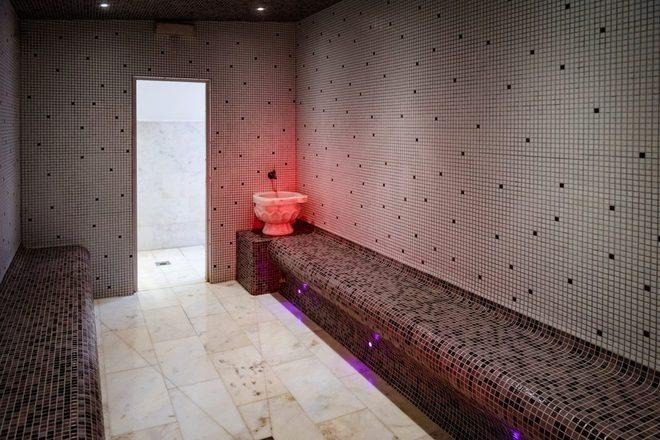
The ritual begins in the steam room. You sit or lie in warm, moist heat for ten to fifteen minutes. The temperature is kept around 40 to 45 degrees Celsius, with high humidity. This environment softens the outer layer of dead skin, opens pores, and encourages your muscles to loosen. You will sweat freely, which prepares the surface of the body for the soap.
2. The Application of Beldi Black Soap
Once your skin is damp and warm, your therapist applies Moroccan black soap, known locally as savon beldi. This dark, paste-like soap is made from macerated olives, olive oil, and potassium hydroxide. It is rich in vitamin E and naturally alkaline. The therapist smooths the paste over your arms, legs, back, and torso. You rest with the soap on your skin for five to ten minutes in the humid warmth, allowing it to break down sebum and loosen dry skin without stripping your natural barrier.
3. Exfoliation with the Kessa Glove
After rinsing off the black soap with warm water, the therapist begins the scrub using a coarse, crepe fabric mitt called a kessa. This is the most famous part of the Moroccan hammam spa experience, and it is unapologetically firm. Your therapist uses long, sweeping strokes across your limbs and torso. As they work, tiny greyish rolls of dead skin and impurities visibly peel away from your body. It is not painful, but it is intense. If you prefer firmer or gentler pressure, you can simply tell your therapist.
4. The Rhassoul Clay Mask
With dead surface skin completely cleared, the therapist applies a layer of Moroccan rhassoul clay. Mined from the Atlas Mountains, this mineral-rich clay contains natural silica, magnesium, and iron. It is applied over the body and left to sit for several minutes. Many people find it helps absorb excess oil, soothe irritated skin, and leave the body feeling noticeably balanced and clean.
5. The Final Rinse and Cool Down
The treatment concludes with warm water poured generously from metal bowls over your body, washing away every trace of clay. You are then dried with clean towels and invited to rest. Cooling down gradually is essential, as the combination of heat and deep scrubbing lowers blood pressure and leaves your limbs feeling completely limp and relaxed.
What Is the Difference Between a Moroccan Hammam And a Turkish Hammam?
Both rituals use heated rooms, running water, and body scrubbing, but their products and techniques differ significantly.
A Moroccan hammam relies on black olive soap, a kessa glove, and mineral clay. While a Turkish hammam centres on a lighter kese mitt, a generous cloud of soap foam, and a rhythmic foam massage.
If you are trying to choose between them, it helps to understand what each tradition prioritises:
- Cleansing Product: Moroccan rituals use dark, dense savon beldi made from pressed olives. Turkish rituals use an olive-oil vegetable soap whipped inside a special linen bag to generate heaps of white lather.
- Exfoliation Style: The Moroccan kessa glove has a slightly coarser texture designed to roll away stubborn dead skin following the soap application. While a classic Turkish bath in London pairs a lighter kese scrub with soothing foam across a heated marble platform, the Moroccan ritual stays focused on firm, deep skin renewal.
- Finishing Treatment: A classic Moroccan bath incorporates rhassoul clay to purify the skin. A Turkish bath concludes with gentle foam bubbles and pouring bowls of warm water.
At The Old Hammam & Spa, our Turkish and Moroccan hammam treatments celebrate both traditions under one roof, allowing you to choose the exact bathing heritage that matches your preference.
What Should You Expect on Your First Visit?
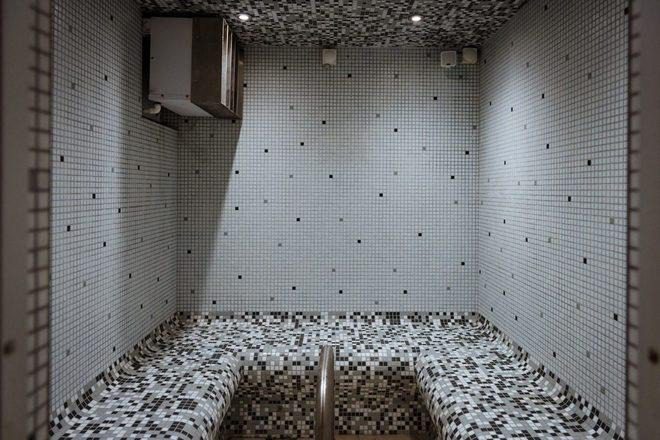
On your first visit to a hammam, you will check in at reception, change into swimwear, and spend your session alternating between thermal facilities and marble washing stations. You will be assigned a therapist for your scrub, and clean towels are provided upon arrival.
Visiting a bathhouse for the first time can feel slightly intimidating if you are unfamiliar with the layout, but the routine is straightforward:
- What to Wear: You should wear comfortable swimwear. Standard bikinis, swim trunks, or modest swim shorts are all suitable. In traditional Moroccan public baths people often bathe in underwear, but London bathhouses require standard swimwear in communal zones.
- Arrival and Timings: Aim to arrive 15 minutes before your scheduled appointment. This gives you time to change, store your valuables in a secure locker, and take a quick shower before entering the thermal rooms.
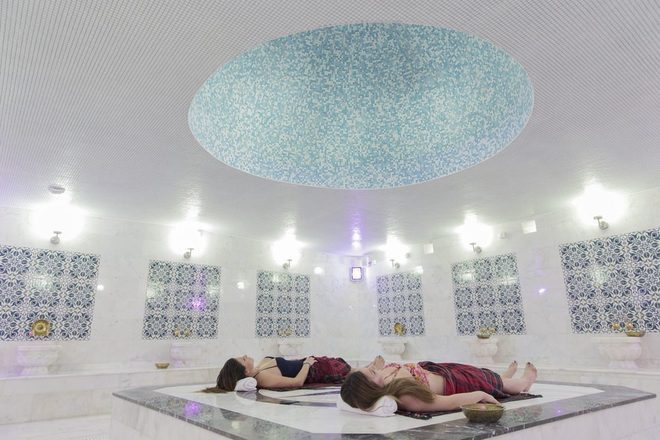
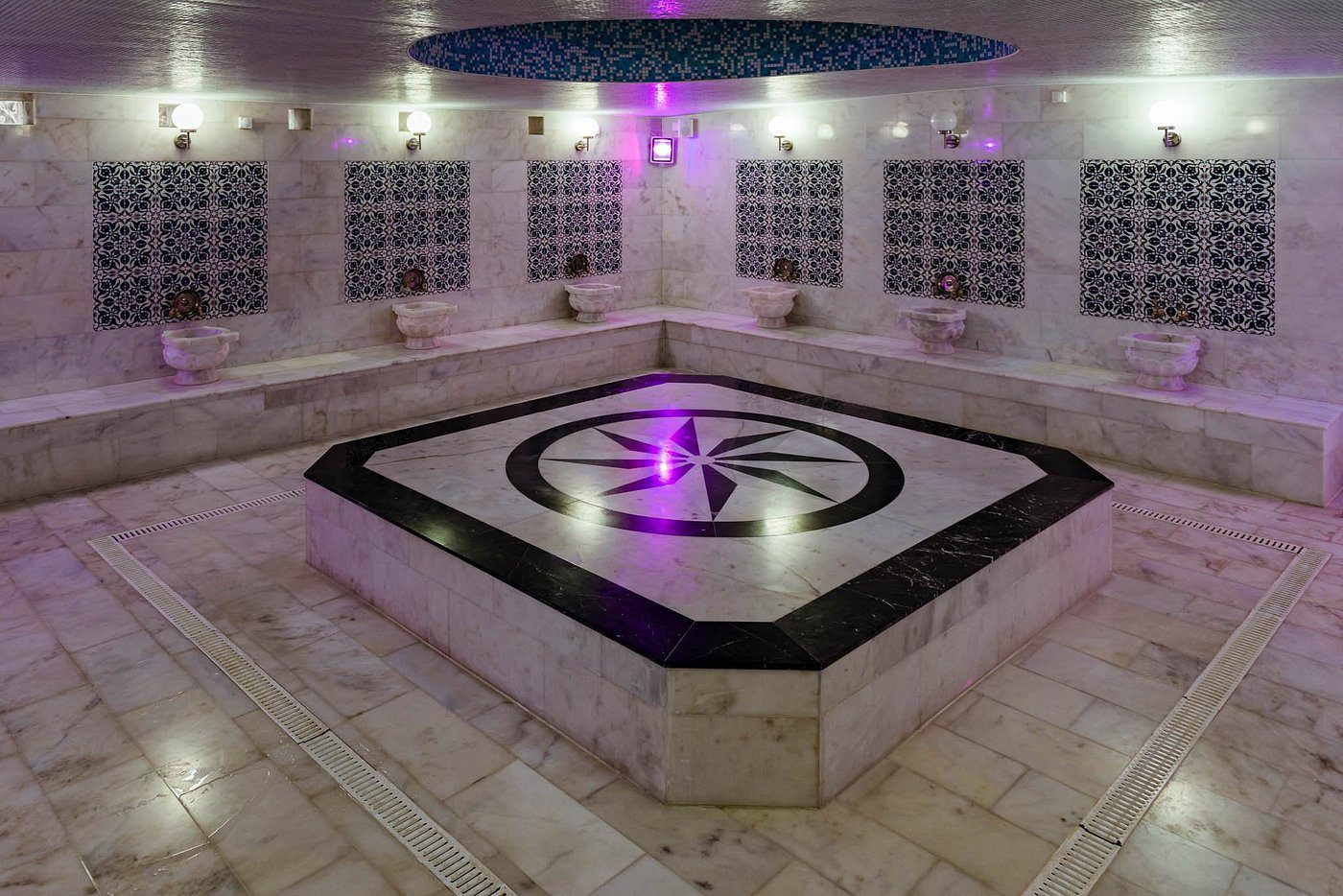
- Shared and Private Spaces: The Old Hammam & Spa operates a communal hammam room featuring 13 marble basins and a central heated marble slab. To ensure everyone feels comfortable, the spa runs dedicated ladies-only days on Mondays, Wednesdays, and Saturdays, alongside mixed sessions on Fridays and Sundays.
- Hydration: Hammam treatments involve substantial perspiration. Drink a glass of water before you begin, and take advantage of the complimentary herbal tea provided in the relaxation lounge after your session.
Who Is a Moroccan Hammam Suitable For?
A Moroccan hammam suits anyone looking for thorough body exfoliation, relief from tight muscles, or a break from daily screen fatigue. It is especially beneficial during the cold British autumn and winter months, when central heating leaves skin parched and flaky.
However, because the treatment involves elevated heat and physical scrubbing, it may not suit everyone:
- Sensitive Skin or Skin Conditions: If you have active eczema flare-ups, open wounds, sunburn, or severe psoriasis, the coarse kessa glove will cause irritation. You should wait until your skin has healed before booking.
- Cardiovascular Health: The sustained warmth of the steam room and sauna causes blood vessels to dilate. If you suffer from unmanaged high or low blood pressure, heart conditions, or frequent fainting spells, consult your GP before booking.
- Pregnancy: Expectant mothers should avoid intense heat treatments and steam chambers, particularly during the first and third trimesters.
- Recent Cosmetic Procedures: Anyone who has recently had laser hair removal, chemical peels, or waxing should wait at least 7 to 10 days before receiving a hammam scrub.
How Can You Experience an Authentic Moroccan Hammam in London?
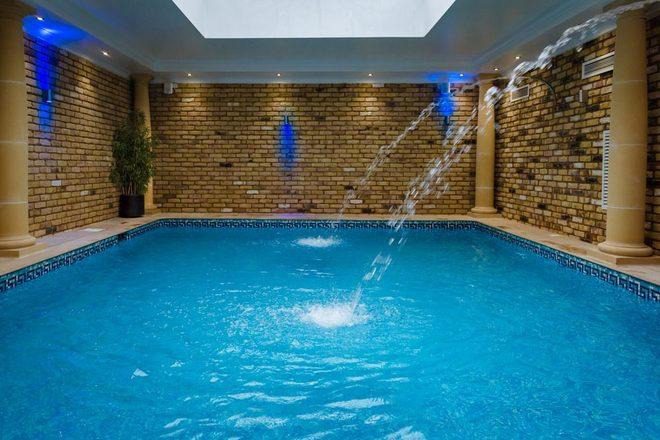
If you are searching for an authentic Moroccan hammam near me, The Old Hammam & Spa in Edmonton provides genuine North African bathing traditions alongside a complete suite of modern thermal and cooling facilities.
Rather than offering just a single treatment room, the property features:
- A 13-basin marble hammam room with individual brass bowls for water pouring.
- A central heated marble platform where body scrubs and foam washes take place.
- A dry wooden sauna reaching up to 85 degrees Celsius.
- A humid steam room running at 45 degrees Celsius.
- A dedicated ice room chilled to -15 degrees Celsius alongside an ice bucket shower for cold-water therapy.
- A 7.5-metre swimming pool with high-pressure hydro cannons and a 5m by 2.5m jacuzzi.
Whether you refer to the ritual as a Moroccan bath or a Moroccan hammam, packages start from £60. Our signature Traditional Moroccan Hammam package is priced at £90 for 90 minutes of dedicated treatment and full facility access.
If you want a longer ritual that includes rhassoul clay and nourishing argan oil hair conditioning, the Majestic Moroccan Hammam offers 105 minutes of care. You can browse all available options on our spa packages page.
To reserve your session or ask questions about our ladies-only days, get in touch with the team directly or call 020 8807 3330.
Frequently Asked Questions About Moroccan Hammams
Is a Moroccan hammam scrub painful?
No, the scrub is not painful, but it is firm and invigorating. The therapist uses purposeful pressure to strip away dead skin cells. The sensation feels similar to a vigorous towel rub down. If at any point the pressure feels too strong, simply ask your attendant to soften their touch.
What is Moroccan black soap made of?
Moroccan black soap, or savon beldi, is a vegetable paste made from macerated black olives, olive oil, and potassium hydroxide. It has a gel-like consistency and an earthy scent. It contains no synthetic fragrances or harsh detergents, making it naturally high in vitamin E.
How often should you have a Moroccan bath?
For optimal skin health, having a Moroccan bath once every three to four weeks is ideal. This cadence aligns with your skin’s natural cell renewal cycle of roughly 28 days. Scrubbing more frequently than every two weeks can strip healthy skin layers and cause sensitivity.
Do I need to be completely naked during the treatment?
No. In UK hammams, guests wear swimwear throughout the entire experience, including during the scrub and soaping stages. Two-piece swimwear or standard swim shorts are recommended so the therapist can access your back, arms, and legs easily.
Can men and women visit together?
Yes, but only on designated mixed days. The Old Hammam & Spa hosts mixed sessions on Fridays and Sundays. Mondays, Wednesdays, and Saturdays are reserved exclusively for ladies. Be sure to check the timetable before booking.