If you’ve got sensitive skin and the idea of being in a hot, steamy hammam makes you pause, you’re not the only one. We hear this every week from clients who want the relaxation and cleansing benefits of a hammam but are nervous about triggering a flare-up. So let’s dive straight into the question: Is a hammam safe for sensitive skin?
Spoiler: It depends on how it’s done. Different skin types have different outcomes. Let’s break it down.
Understanding Sensitive Skin: What You’re Dealing With
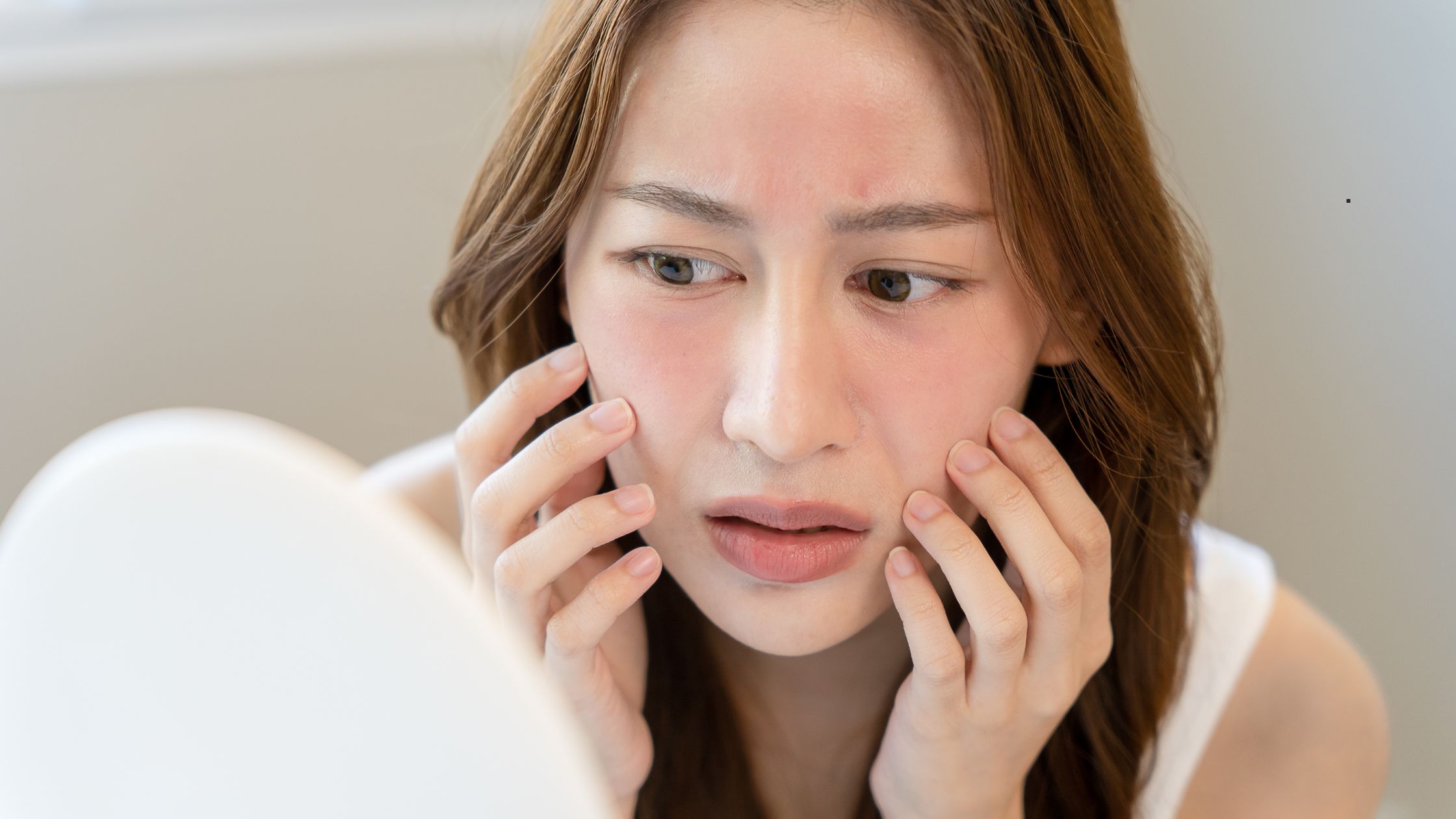
Before we talk treatments, let’s talk skin types. Sensitive skin can show up in different ways. Some people experience dryness and flakiness. Others have redness, inflammation, or a burning sensation from common skincare products. And for many, it’s a mix of all of the above.
Now add in specific skin conditions like eczema, rosacea, or chronic dryness, and suddenly the idea of high temperatures, steam, and scrubbing sounds like a recipe for disaster. That’s a totally fair concern. But again – is a hammam safe for sensitive skin, it really comes down to method, moderation, and customization.
What Happens During a Traditional Hammam Session?
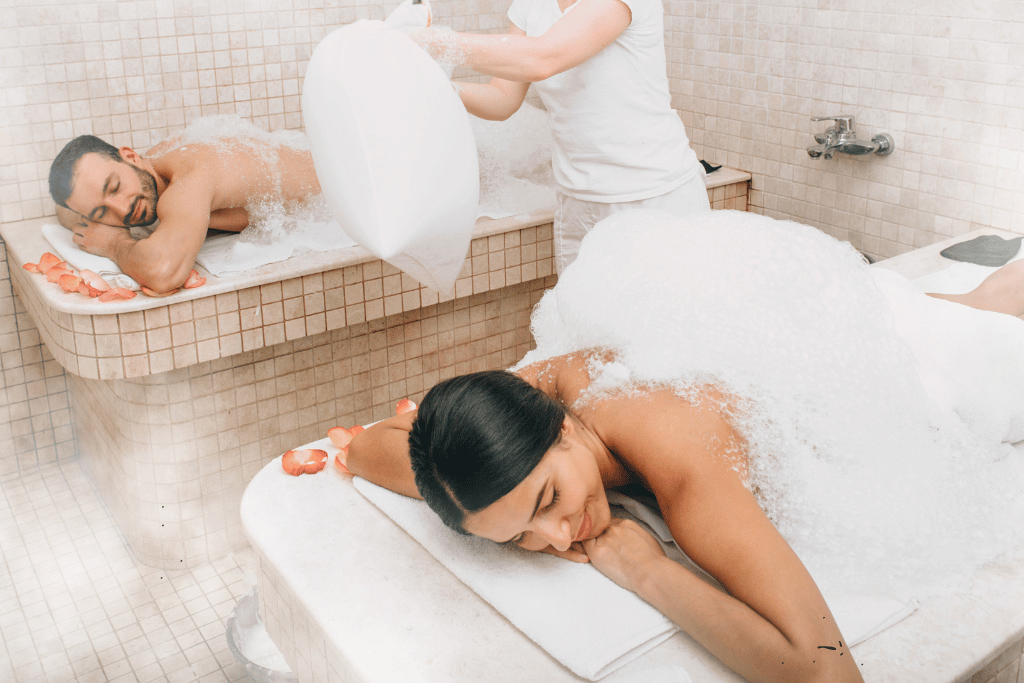
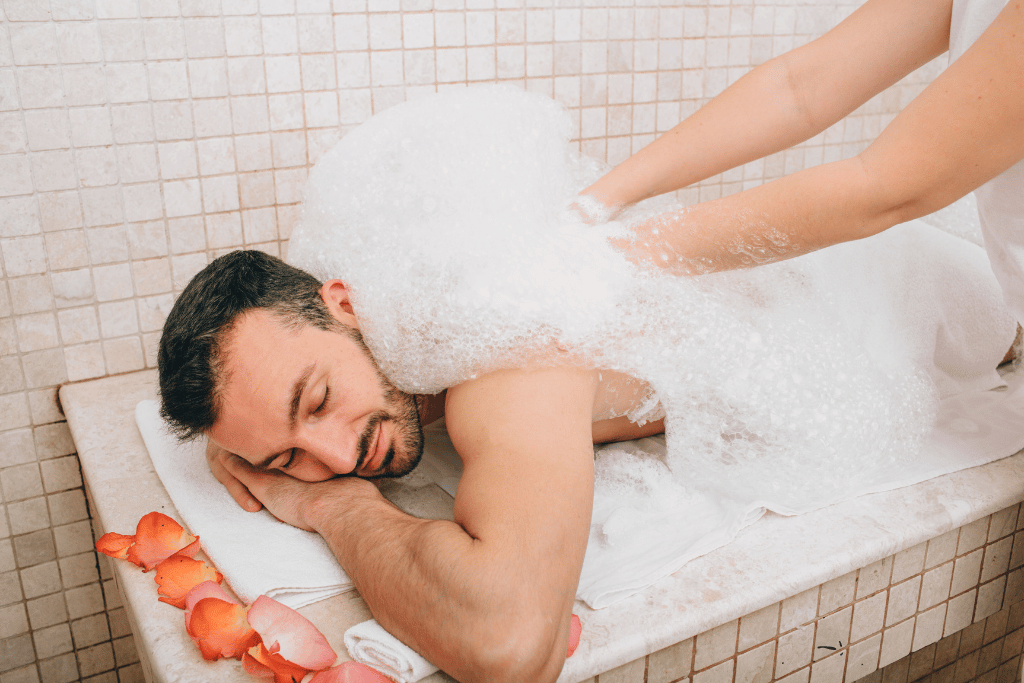
If you’ve never had a hammam before, here’s what typically happens: you enter a warm, steamy room to open up your pores. Then comes a full-body exfoliation using a kessa glove, followed by rinsing, soaping, and more rinsing. Some sessions include ghassoul clay, essential oils, or deep hydration treatments.
For most skin types, this is incredibly detoxifying and refreshing. But for sensitive skin? Not every step is ideal.
This brings us back again to that big question: Is a hammam safe for sensitive skin – and here’s the breakdown.
Skip the Aggressive Scrubs: Here’s the Sensitive Skin Alternative
One of the main concerns we see in clients with eczema, rosacea, or dry skin is the fear of harsh exfoliation. And honestly? They’re right to hesitate.
The traditional kessa glove, when used too aggressively, can lead to irritation, micro-tears, and worsen inflammation. So what do our estheticians say?
You can absolutely still exfoliate – but gently. Use a softer exfoliating mitt or ask for a modified version of the treatment that avoids rough scrubbing. No shame in asking. It’s your skin, not a rug.
Again: Is a hammam safe for sensitive skin? Well, less is more when it comes to exfoliation.
Steam: Good or Bad?
Steam is a huge part of the hammam experience. It helps soften the skin, open up pores, and boost circulation. For many, it’s the most relaxing part of the whole thing. But for people with conditions like rosacea, it can trigger redness and flushing.
Does that mean no steam ever? Not quite. It’s all about timing and intensity. Don’t stay in the steam room for too long. Go in for short bursts, five to ten minutes max – and then cool down with lukewarm water.
Yet again, monitor your skin’s reaction in real-time. If your cheeks start looking like tomatoes, it’s time to step out and rinse.
The Product Trap: Fragrances, Essential Oils, And You
Traditional hammam treatments sometimes include products like eucalyptus black soap, clay masks, and massage oils. These can be amazing for deep cleansing and detoxifying the skin – if your skin can handle it.
Fragrances and essential oils are common triggers for people with sensitive skin. Eczema and rosacea-prone clients should be particularly cautious with these. Our estheticians recommend fragrance-free, hypoallergenic alternatives. And if you’re not sure what was used in the treatment – ask. Always ask.
Only use products your skin already knows and loves or stick to minimalist options.
Post-Hammam Hydration: The Step You Can’t Skip
No matter how mild the session, a hammam will strip your skin of oils. That’s just how cleansing works. If you’ve got sensitive or dry skin, this step needs extra attention.
You need to restore moisture immediately. Our estheticians recommend applying a fragrance-free, rich moisturizer or body balm right after your session. Look for ingredients like ceramides, hyaluronic acid, and shea butter. Keep it simple. Avoid acids, retinols, and anything “active” right after.
For good measure, hydrate immediately and generously afterward.
Eczema, Rosacea, Dry Skin – Let’s Get Specific
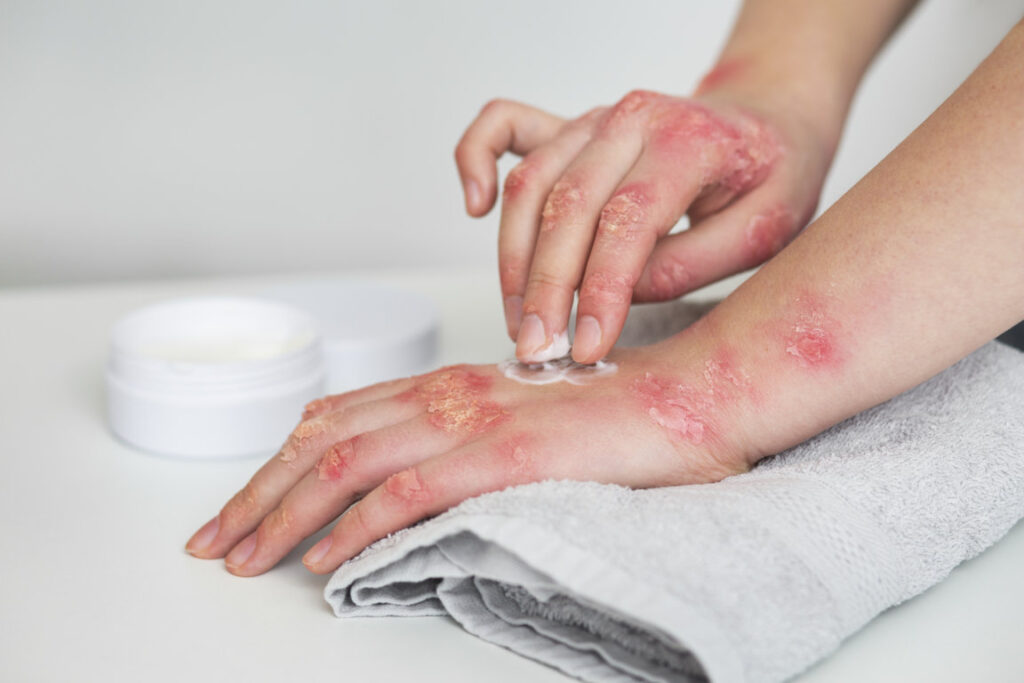
Let’s get brutally honest about what you should avoid or modify based on your skin condition:
- Eczema: Skip rough exfoliation, limit time in steam, avoid essential oils. Stick to fragrance-free soaps and creams. Moisturize like your life depends on it
- Rosacea: No extreme heat. No eucalyptus. No long steam sessions. Avoid facial exfoliation entirely and only go for body treatments.
- Dry Skin: Steam can be your friend, but exfoliation should be minimal. Focus on rehydration afterward and avoid anything that feels stripping.
So, is a hammam safe for sensitive skin? Absolutely, as long as you’re not following the standard one-size-fits-all protocol.
Ask for a Custom Session – You’re Not Being “Extra”
We can’t say this enough: it’s not annoying, rude, or “extra” to ask for a customized hammam treatment. Sensitive skin needs specific care. And any spa worth your time should be happy to make adjustments.
Let the staff know about your skin concerns in advance. Bring your own products if you have to. Skip the things that don’t feel right. No hammam should leave you inflamed and regretting everything.
Is a Hammam Safe for Sensitive Skin? Here’s What Our Estheticians Actually Recommend – don’t be passive in your skincare journey. Advocate for what you need.
What Our Clients With Sensitive Skin Actually Say
A lot of our regulars came in skeptical the first time. Many had tried facials or other treatments before that left them raw, red, or irritated. But with small adjustments – less scrubbing, gentler products, shorter steam time – they not only tolerated the hammam experience, they actually started loving it.
Several clients with eczema told us they feel smoother and more hydrated than ever after our adapted hammam. Clients with rosacea report better skin texture and zero flare-ups when we remove steam and oil from the equation.
So to circle back: Is a hammam safe for sensitive skin? it’s not only safe, it can be healing. If it’s done right.
Final Answer: Is a Hammam Safe for Sensitive Skin?
Yes – if you:
- Use gentler exfoliation
- Limit steam exposure
- Avoid strong essential oils and fragrances
- Moisturize immediately after
- Tailor your treatment to your specific skin condition
If your skin is reactive, you don’t have to skip out on self-care. You just have to make it work for you.
Book Your Sensitive-Skin-Safe Hammam with Us
At The Old Hammam & Spa in Edmonton, London, we’ve made it a priority to offer modified treatments for all skin types. Our estheticians are trained to handle delicate skin with care and experience. Just let us know what your skin needs, and what it doesn’t – and we’ll take it from there.
Ready for a personalized hammam session that actually leaves your skin happy? Call us today or book online and ask about our sensitive-skin-friendly The Old Hammam & Spa treatments. You deserve it.