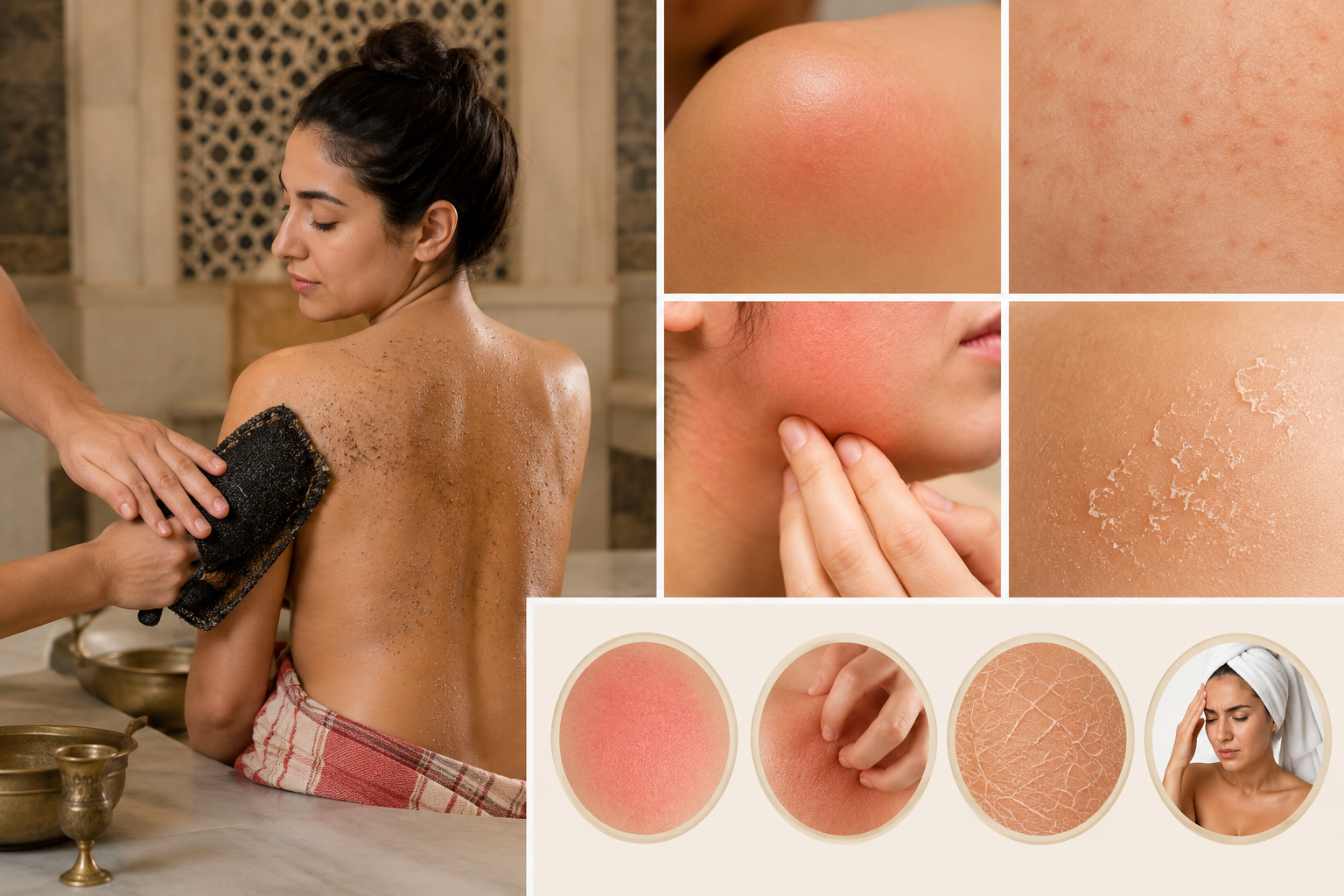
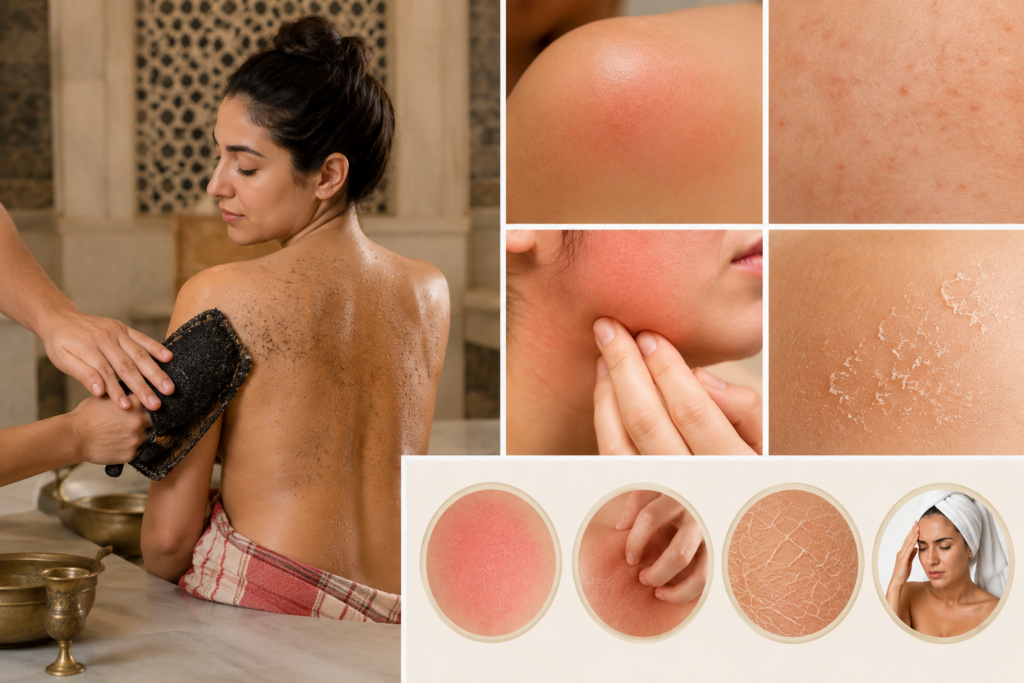
A hammam scrub truly feels amazing but do you know that it can go too far, as well? Knowing when a hammam scrub is too aggressive for your skin is honestly one of the most useful things you can learn before you walk into a traditional bathhouse, or book a treatment at a spa.
The Redness That Doesn’t Fade Is a Red Flag
Some redness during and right after a scrub is completely normal. Your skin gets warm, circulation increases, everything looks a little flushed. That’s fine. That goes away.
What’s not fine is redness that sticks around for hours. If your skin is still visibly red, blotchy, or irritated two or three hours after your treatment, that’s your skin telling you it was handled too roughly. Healthy skin bounces back. Compromised skin stays angry.
Watch out for a burning sensation that persists after you’ve showered and cooled down. That specific, low-level sting is a clear signal that the scrubbing went past exfoliation and into actual abrasion territory.
Raw, Tight, or Stinging Skin After the Session
You should feel smooth after a scrub, not raw. There’s a meaningful difference between that clean, polished feeling and the tight, almost-painful sensation of skin that’s been stripped too hard.
Knowing when a hammam scrub is too aggressive for your skin often comes down to this exact feeling post hammam treatment. If you step out and your skin feels like it’s been sandpapered rather than polished, that’s not a good sign. Applying your usual moisturiser and wincing slightly because it stings? Also not normal. That sensation means the protective skin barrier took damage, and that takes days, sometimes longer, to fully recover.
Broken Skin And Visible Scratches
This one’s obvious, but it still happens more than it should. If you can see marks, scratches, or small broken patches of skin after a scrub, the technique was definitely too aggressive. The kessa mitt in a hammam is designed to lift dead skin cells, not to remove live ones.
Some skin types, particularly thin or sensitive skin, bruise or break more easily than others. Age plays a role too. Older skin tends to be more delicate, and it needs a much lighter touch than younger, thicker skin. A good scrub technician reads the skin in front of them. One who doesn’t adjust their pressure based on what they’re working with is a problem.
When a Hammam Scrub Is Too Aggressive for Your Skin: The Timing Factor
Timing matters more than most people realise. A hammam scrub should never happen on skin that hasn’t been properly prepared with steam. The whole point of the heat and humidity is to soften the skin so the dead layer releases easily. If you skip that stage, or it’s cut short, the same pressure that would normally be fine becomes rough enough to irritate.
This is one of the more common ways when a hammam scrub is too aggressive for your skin to play out in practice. You went in, the steam room felt short, and then the scrub happened anyway. Your skin wasn’t ready, and it showed.
Delayed Reactions: What Shows Up the Next Day
Sometimes you won’t notice anything until the following morning. You wake up and your skin looks unexpectedly angry. Maybe it’s dry in patches, maybe it’s peeling in a way that feels irritated rather than the normal post-exfoliation flaking. Maybe you’ve broken out in a rash along the areas that were scrubbed hardest.
These delayed reactions are still telling you that the treatment crossed a line. Skin sensitivity can peak 12 to 24 hours after the damage occurred. So if you’re fine immediately after but rough the next day, that experience still counts.
Skin Types That Need Extra Care
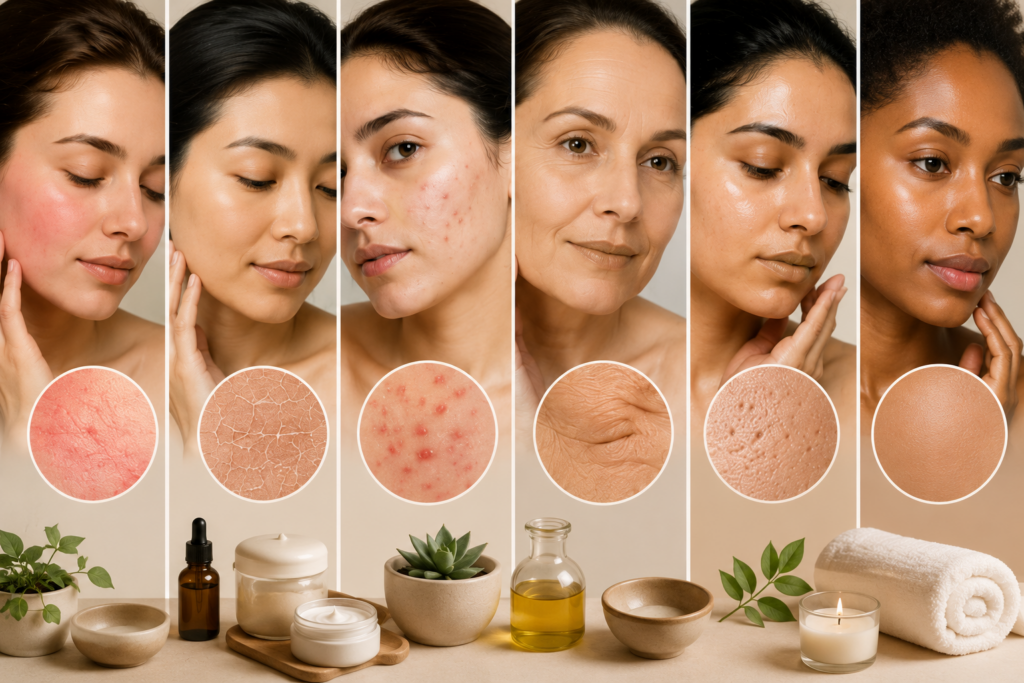
Not everyone walks into a hammam on equal footing. Certain skin types are just more vulnerable to over-scrubbing, and it’s worth knowing where you sit before your treatment.
Sensitive or reactive skin flares up easily and takes longer to calm down. If your skin regularly reacts to new products or environmental changes, it’ll react faster to an aggressive scrub too.
Eczema-prone or rosacea-affected skin should approach hammam scrubs with real caution.
These conditions already involve a compromised skin barrier. Knowing when a hammam scrub is too aggressive for your skin becomes especially critical here, because even a moderately firm scrub can trigger a full-blown flare-up.
Sunburned or recently waxed skin should genuinely not be scrubbed at all. Both conditions leave skin in a sensitised state where any friction is too much friction.
What Good Exfoliation Actually Feels Like
It’s easier to spot the problem when you know what normal looks and feels like. After a well-done hammam scrub, your skin should feel remarkably soft. Smooth in a way that’s almost surprising. There might be a light pinkness for an hour or so, but it should be even and it should calm down on its own.
You should be able to moisturise straight after without any stinging. Your skin should look glowy, not irritated. And you should feel genuinely relaxed, not sore.
When a hammam scrub is too aggressive for your skin, the contrast is noticeable. There’s discomfort where there should be ease. Irritation where there should be calm.
Speaking Up During the Treatment
This is the part a lot of people skip because it feels awkward. But if the scrub is hurting you during the session, say so. Ask for lighter pressure. A professional therapist won’t take offence. They’re trying to give you a good experience, and they can only adjust if you tell them what you’re feeling.
Don’t tough it out and hope it improves. That approach tends to result in walking out with skin that needs a week to recover, which is the opposite of the point.
How Often Is Too Often
Even a perfectly gentle scrub can become problematic if you’re doing it too frequently. Once every one to two weeks is a reasonable rhythm for most people. More than that, and you’re not giving your skin enough time to go through its natural renewal cycle before you start removing cells again.
When a hammam scrub is too aggressive for your skin, frequency is sometimes the culprit even when the technique itself is fine. The skin never gets a real chance to strengthen between sessions, so it stays in a perpetually sensitised state.
Visit Us at The Old Hammam
If you’ve had a rough experience elsewhere or you’ve simply never tried a traditional hammam scrub before, we’d love to show you what it’s supposed to feel like.
At The Old Hammam & Spa in Edmonton, London, our therapists are trained to work with your skin, not against it. Every treatment starts with proper steam preparation, and the scrub itself is always adjusted based on your skin type and how you’re responding. We want you walking out feeling genuinely renewed, not tender.
Book your experience at The Old Hammam today and discover the difference that proper technique, attention, and care actually makes. Your skin will thank you for it.