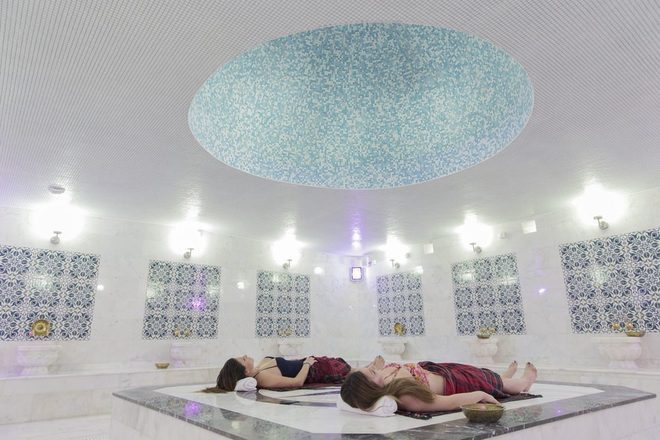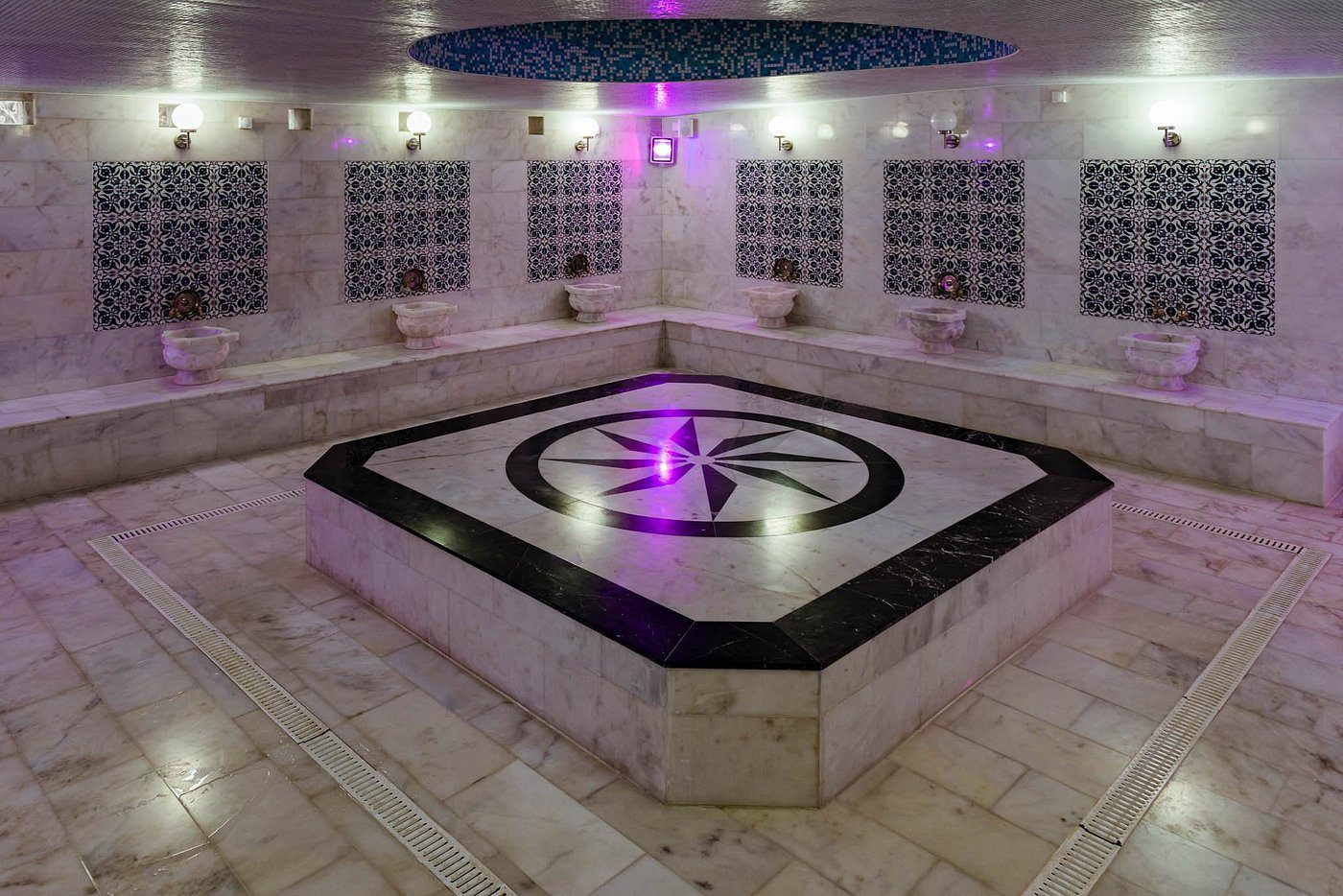
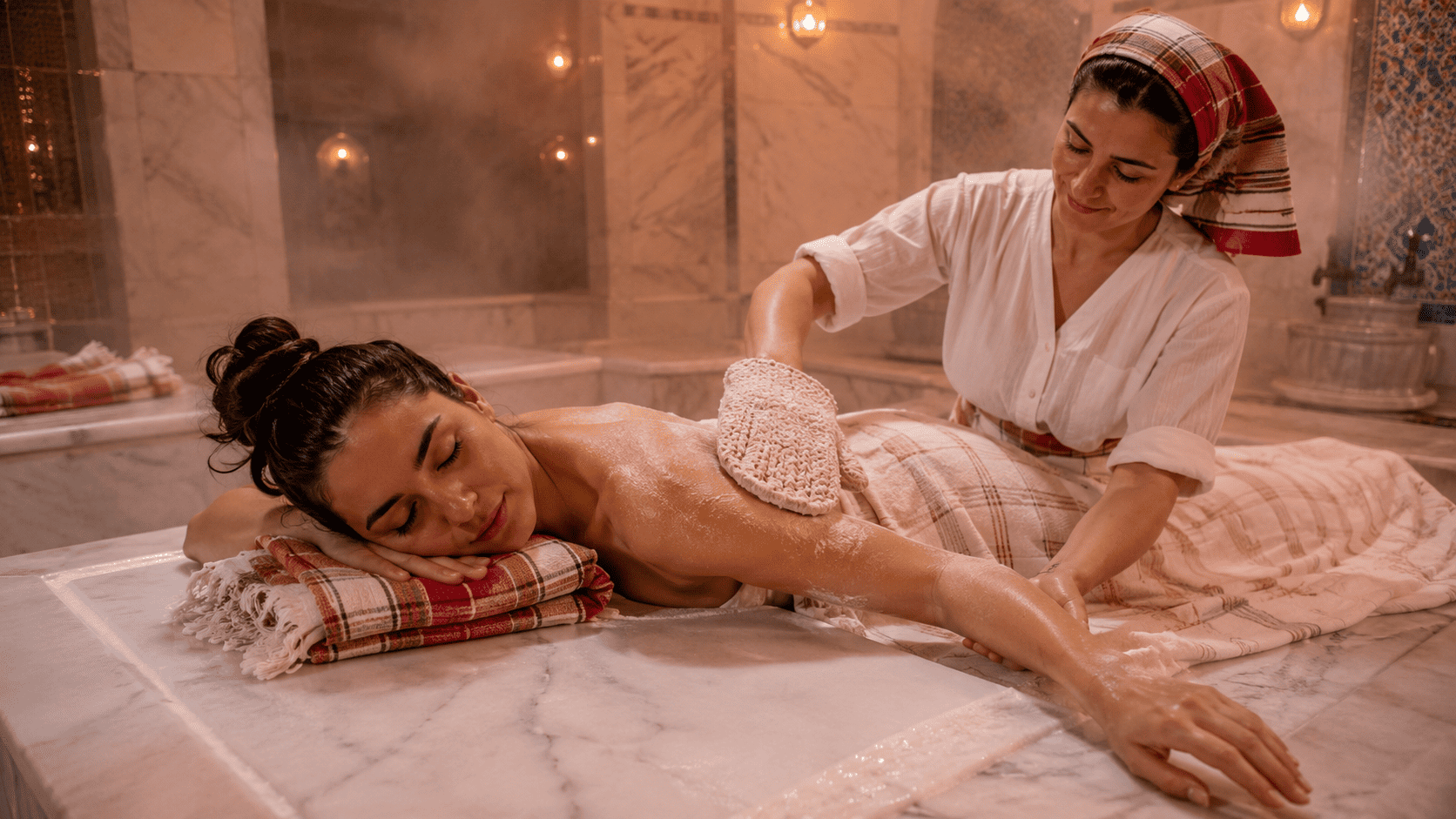
A traditional hammam should leave your skin feeling refreshed, smoother, and comfortably clean. That’s the experience people look forward to. The deep cleanse, the warm steam, and the satisfying scrub all work together to remove dead skin cells and leave your body feeling lighter.
But there’s a fine line between a thorough exfoliation and one that’s simply too aggressive.
An experienced hammam therapist understands exactly how much pressure your skin can handle. Someone with less experience, or someone who isn’t paying close attention to your skin type, can accidentally remove more than they should. Instead of walking out glowing, you might leave with skin that’s irritated, sensitive, or even damaged.
Knowing the signs that a hammam therapist is over-exfoliating the skin can help you recognize when something isn’t right. It also helps you choose a spa that puts skin health ahead of aggressive scrubbing.
Healthy Exfoliation Should Never Feel Painful
A common misunderstanding is that harder scrubbing means cleaner skin. It doesn’t.
Dead skin sits on the surface. It doesn’t require painful pressure to remove it. In fact, experienced therapists usually rely on proper technique rather than brute force. The warmth of the steam has already softened the skin, making exfoliation much easier.
If you find yourself clenching your muscles, pulling away, or feeling sharp discomfort during the scrub, that’s your body sending a message. Some mild friction is completely normal. Pain isn’t.
Redness That Doesn’t Fade Quickly
Your skin may look slightly pink after a hammam. Increased blood circulation naturally brings more color to the surface, especially if you have fair or sensitive skin. That’s expected.skin barrier has been compromised
What isn’t normal is redness that sticks around for hours.
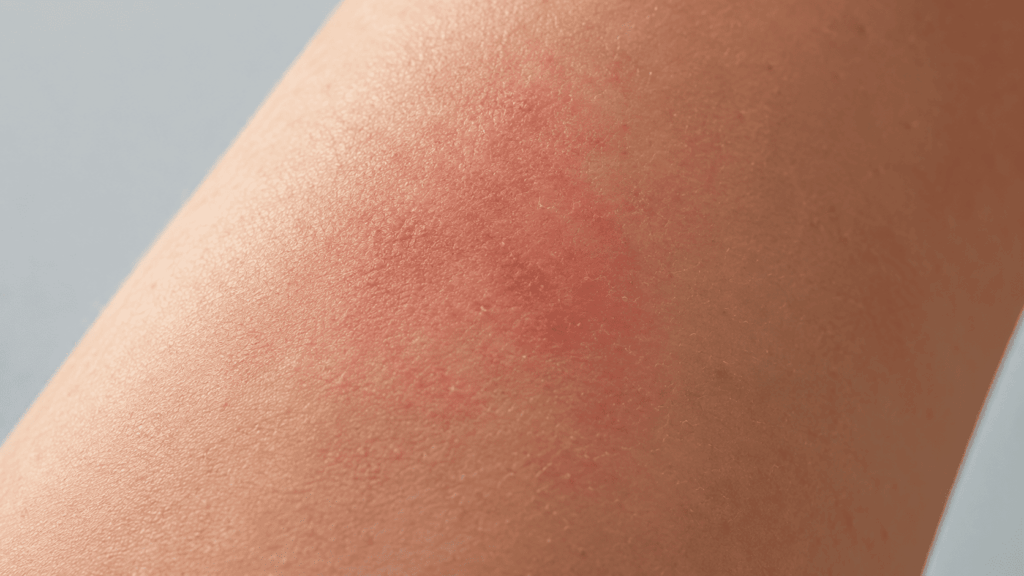
If your skin remains bright red, feels hot to the touch, or continues burning long after you’ve finished your session, too much of the protective outer layerskin barrier may have been removed.
One of the easiest signs that a hammam therapist is over-exfoliating the skin is prolonged redness that refuses to settle.
Your Skin Feels Tight Instead of Comfortable
People often describe healthy skin after a hammam as soft, smooth, and fresh. Over-exfoliated skin feels different.
It can feel unusually tight, almost like it’s shrinking every time you move. Some people compare it to having a sunburn that’s just beginning.
This happens because the natural oils that help maintain your skin barrier have been stripped away.
That protective barrier matters more than many people realize. It keeps moisture inside while protecting you from irritation, bacteria, and environmental pollutants. Without it, your skin struggles to stay balanced.
Tiny Scratches or Broken Skin
A traditional kese glove is designed to lift dead skin, not create wounds.
If you notice small scratches, broken patches, or tiny cuts after your treatment, the therapist likely used excessive pressure or repeated the same area too many times. This isn’t simply a cosmetic issue.
Broken skin creates an opening for bacteria, increasing the chance of irritation or infection. It also slows the healing process and makes your next skincare routine surprisingly uncomfortable. Even applying a basic moisturizer may sting.
Burning When Applying Lotion
Think about what happens after your session. You apply moisturizer. Instead of feeling soothing, it burns.
That’s a strong clue that the skin barrier has been compromised.
Even gentle, fragrance free lotions can sting when freshly exposed skin has been scrubbed too aggressively.
Many people mistakenly blame the product itself. In reality, the moisturizer is simply revealing damage that’s already there.
Excessive Peeling During the Following Days
Some very light flaking isn’t unusual after deep exfoliation. Large sheets of peeling skin are another story.
When healthy layers underneath become exposed too soon, they often begin shedding over the next few days. This can leave your skin looking patchy rather than radiant.
Ironically, many people think they need another scrub. Actually, that’s the last thing the skin needs. At that point, hydration and recovery should become the priority.
Skin Becomes Sensitive to Clothing
This one surprises a lot of first time visitors. Your towel suddenly feels rough. Your cotton T-shirt feels scratchy.
Even your bedsheets seem uncomfortable.
That’s because over-exfoliation exposes nerve endings that are usually protected by the outer layer of skin.
If ordinary fabrics suddenly become irritating after your hammam visit, it’s worth considering whether too much skin was removed during the scrub.
It’s another of the common signs that a hammam therapist is over-exfoliating the skin that people often overlook.
Breakouts Can Sometimes Follow
People usually expect fewer blemishes after exfoliation. Sometimes the opposite happens.
When the skin barrier becomes damaged, inflammation increases. That irritation can trigger breakouts, especially for people who already have acne prone or sensitive skin.
Tiny bumps may appear where the scrub was most aggressive. The skin isn’t “purging.” It’s reacting.
Sensitive Areas Should Always Receive Extra Care
Not every part of your body has the same skin thickness.
The chest, neck, underarms, inner arms, and backs of the knees are naturally more delicate than areas like the back or elbows.
A skilled therapist adjusts pressure accordingly.
Someone who applies identical force everywhere risks irritating these thinner areas.
This is why experienced hammam professionals constantly observe how your skin responds instead of following the exact same routine on every client.
What a Professional Hammam Therapist Does Differently
The best therapists don’t focus on removing as much skin as possible. They focus on removing only what’s ready to come away naturally. That means adjusting pressure throughout the session, checking your comfort level, paying attention to skin sensitivity, and recognizing when enough exfoliation has already been achieved.
Good therapists also ask questions before beginning.
- Do you have eczema?
- Have you recently shaved?
- Are you using retinol?
- Have you had recent sun exposure?
Those answers influence how your treatment should be performed.
That’s what separates a genuinely professional hammam experience from an overly aggressive scrub.
How Your Skin Should Feel After a Proper Hammam
A successful hammam leaves behind noticeable but comfortable results. Your skin should feel smooth without feeling raw.
- It should glow without appearing inflamed.
- It should feel hydrated after moisturizing, not painful.
You’ll probably notice that your skincare products absorb more easily over the next few days. That’s exactly what healthy exfoliation is supposed to achieve.
When you know the signs that a hammam therapist is over-exfoliating the skin, you’re much more likely to recognize the difference between proper care and excessive treatment.
Experience the Difference at The Old Hammam in Edmonton London
At The Old Hammam & Spa in Edmonton London, every treatment is tailored to your skin rather than following a one size fits all routine. Our experienced therapists understand that effective exfoliation isn’t about scrubbing harder. It’s about knowing exactly how much your skin needs while protecting its natural barrier.
Whether you’re visiting for your first traditional hammam or returning for regular treatments, your comfort and skin health always come first.
Book your appointment with The Old Hammam in Edmonton London today and discover how a professionally performed hammam can leave your skin feeling beautifully refreshed, balanced, and healthy.