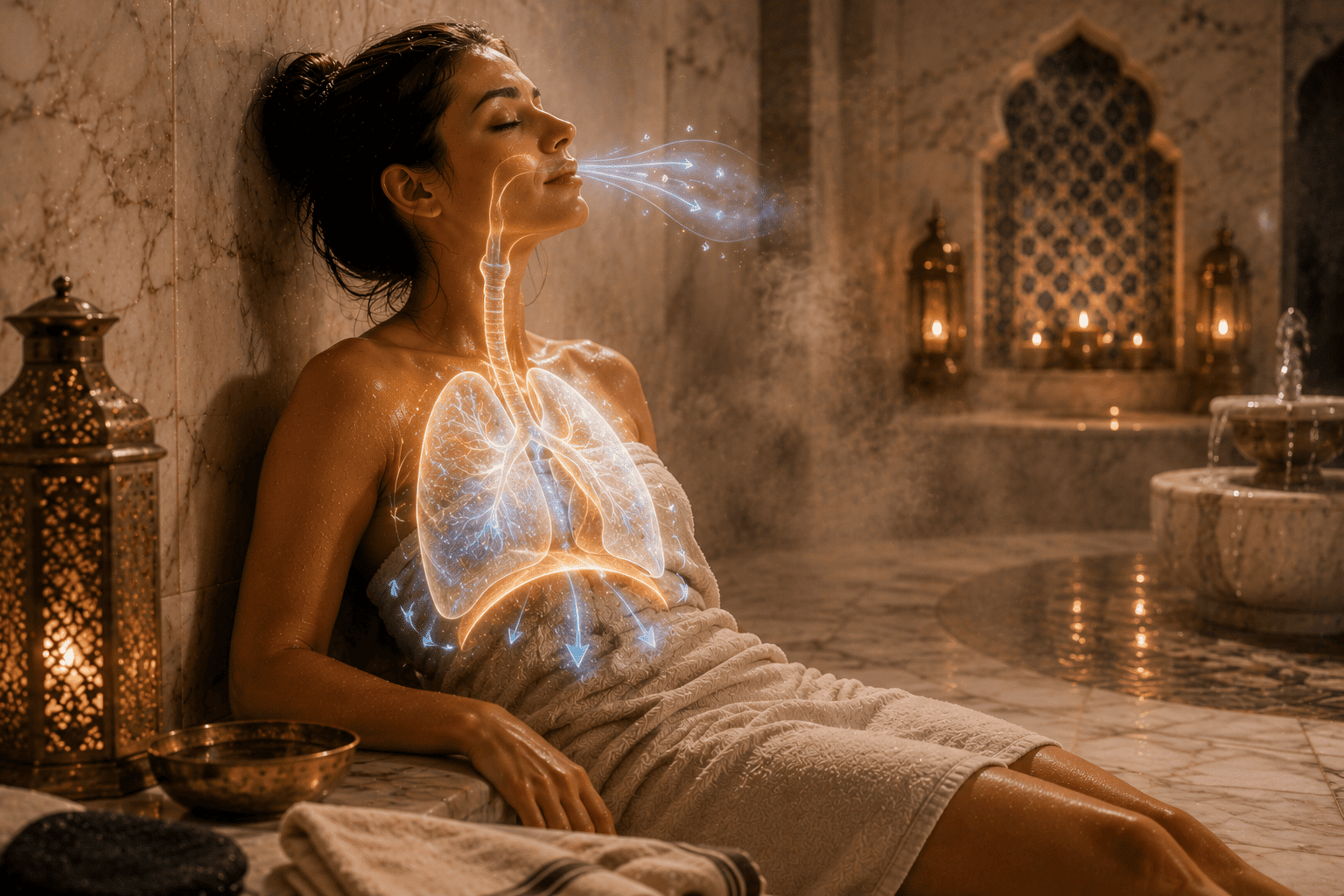
Ever step inside a traditional steam bath and immediately notice your chest moving differently? It happens the second you cross the threshold. You cross over from the cold, rushed outside world into a heavy, thick cloud of warm moisture. Your lungs take notice right away. Your posture loosens up. Suddenly, that shallow, stressed breathing you carried all afternoon simply vanishes. It is a full physical reset.
But why does this happen? Is it just your mind playing tricks because you are trying to relax? Not at all. There is actual, fascinating science happening behind the heavy wooden doors of a steam house. Here is a deep look into the exact reasons why your breathing pattern changes naturally inside a hammam.
What Heat And Humidity Does To Your Breathing?
The first thing that hits you inside a hot bath house is the microclimate. We are talking about temperatures pushing 40 to 50 degrees Celsius mixed with almost 100 percent humidity. That is a massive contrast to ordinary indoor air.
This thick air acts as a natural barrier to your fast, frantic everyday breathing.
When you breathe in dry or cold air, your lungs have to work extra hard to warm it up. Inside a steam chamber, the air is already perfectly prepped for your respiratory system. It is warm, super soft, and completely saturated with moisture.
Dropping the Shallow Chest Breaths
Outside in the real world, most of us are shallow chest breathers. We blame stress, sitting at desks, or just moving too fast. But the intense, enveloping warmth of a bath house forces your body to drop its guard. You can feel your ribs expanding.
Your nervous system gets a clear signal that it is safe to slow things down. Because the air is so heavy, your body intuitively realizes that fast, shallow gasps will not work. You naturally begin to take longer, more purposeful inhalations to pull that comforting steam deep into your lower lungs.
Warm Air and Lung Expansion: What Does Science Say?
So what is happening biologically? Warm air acts as a natural vasodilator, meaning it widens blood vessels. But it also acts as a bronchodilator. This is just a fancy way of saying it coaxes your airways to open up wide.
The smooth muscle tissue lining your bronchioles (the tiny tubes in your lungs) tends to tighten up when you are stressed or cold. Think about how you gasp when stepping into a freezing wind. A steam room does the exact opposite. It melts away that tension.
Why Your Lungs Feel Wide Open
As those tight airway muscles relax, the physical pathway for air gets much larger. This is a primary reason why your breathing pattern changes naturally inside a hammam. Your lungs can hold more volume with far less physical effort.
You are no longer forcing air through a narrow, stressed straw. Instead, you are breathing through an open highway. This sudden lack of resistance makes your breath feel incredibly deep, smooth, and rhythmic without you even trying.
Breaking Down Built-Up Congestion
Most people do not realize how much microscopic dust, pollution, and dried mucus is sitting in their respiratory tracts. Daily city life fills our lungs with junk. The super-dense steam inside a traditional bath works like a natural nebulizer to clear it out.
The tiny water droplets in the steam attach themselves to the dry surfaces of your respiratory tract. This thins out all the stubborn, thick stuff that keeps your breathing shallow. It liquefies the congestion.
The Natural Cleansing Reflex
When this thinning happens, your lungs start clearing themselves out naturally. You might feel a gentle urge to cough or take a massively deep sigh. Do not fight it. That is your respiratory system doing some much-needed housekeeping.
Once those tiny blockages clear up, air flows with zero interruption. Your body adapts by shifting to a slower, incredibly satisfying rhythm because each single breath is delivering way more efficiency than it did ten minutes ago.
Tricking Your Brain Into Total Peace
Your brain and your lungs are constantly talking to each other through the vagus nerve. When you are rushing through a workday, your brain tells your lungs to breathe fast. This keeps your body in a low-grade state of fight-or-flight panic.
The unique environment of a hammam flips this switch completely. The heavy, warm air mimics the conditions of being safe, cozy, and completely protected. Your brain reads this specific physical environment as the ultimate safe zone.
Switching Into Rest And Digest Mode
Once the brain feels safe, it triggers the parasympathetic nervous system. Your heart rate slows down significantly. Your blood pressure drops to a comfortable baseline.
This neural shift is exactly why your breathing pattern shifts organically inside a steam bath. Your body stops preparing for a crisis. It moves into a deep state of restoration, causing your diaphragm to take over the heavy lifting from your chest muscles.
Diaphragmatic Movement on the Marble Slab
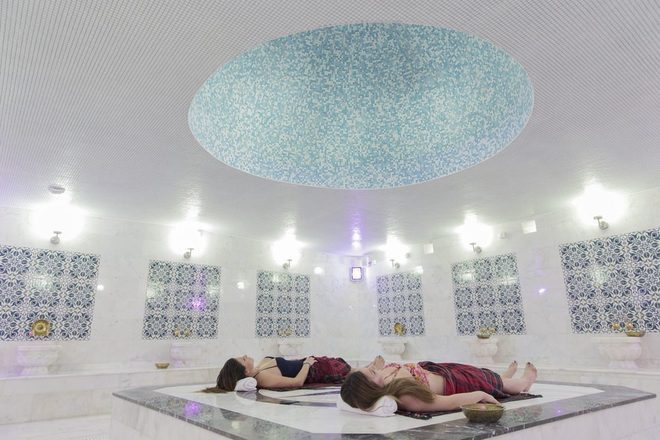
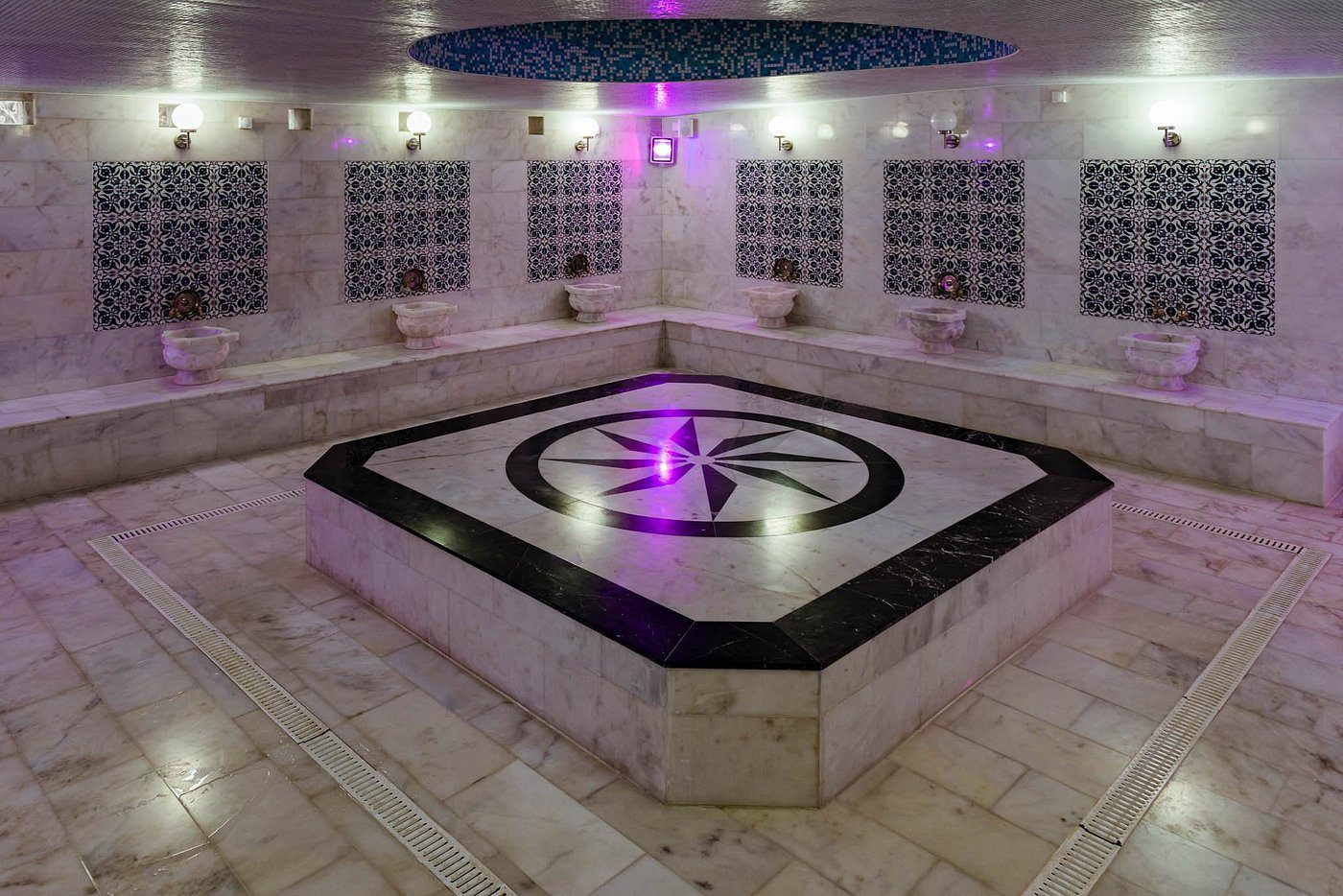
In a traditional Turkish or Moroccan bath, you spend a lot of time lying down flat on a massive, heated marble slab called a göbektaşı. This positional shift changes your respiratory mechanics completely. Lying flat removes the gravitational strain on your torso.
When you combine a flat posture with intense belly-warming heat, your diaphragm gets completely liberated. The diaphragm is that large, dome-shaped muscle right under your ribs that is supposed to handle your breathing.
Letting the Belly Rise
When you lie on the warm stone, you will notice your stomach rising and falling dramatically. This is true diaphragmatic breathing. It is the healthiest way to breathe, yet we rarely do it during our normal routines.
The heat from the hammam marble relaxes your abdominal muscles completely. Because those muscles are loose, your diaphragm can drop lower into the abdomen on every inhale. This draws air into the very bottom sections of your lungs where oxygen exchange is most effective.
The Role of Essential Oils And Aromatherapy

Many traditional steam baths infuse the air with eucalyptus, mint, or black soap scents. These botanical elements are not just there to make the room smell nice. They have an active, physical impact on your nasal passages.
Eucalyptus contains a compound called eucalyptol, which is a proven, powerful anti-inflammatory for the respiratory tract. It triggers the cold receptors in your nose, giving you a strong sensation of increased airflow.
The Illusion And Reality of More Air
Even if your lungs are already open, these herbal vapors trick your brain into feeling like you just opened a massive window. It clears out the sinuses instantly. This mental and physical clarity alters your breath.
You find yourself wanting to take huge, slow sniffs of the scented air. Your inhalations become noticeably longer as you subconsciously try to enjoy the cooling, medicinal feel of the herbs against the hot steam.
How Increased Blood Flow Shifts Your Oxygen Needs
The heat inside a steam room makes your heart pump a bit faster, similar to a light walk. Your blood vessels expand significantly to help radiate heat away from your core. This means your blood is moving quickly throughout your entire body.
Because your circulation is working at peak performance, oxygen delivery becomes incredibly efficient. Your muscles are getting washed in fresh blood without you lifting a finger.
Experience the Power of Breath at The Old Hammam in Edmonton London
If you want to feel this incredible transformation firsthand, you need an authentic space designed for true relaxation. Look no further than The Old Hammam & Spa in Edmonton London. We provide the perfect, timeless environment where you can step away from the chaotic London rush and let the ancient power of steam heal your body.